15K GitHub Stars, No API Key Required: Firecrawl’s Bold Move Toward AI-Native Data Scraping
15K GitHub Stars, No API Key Required: Firecrawl’s Bold Move Toward AI-Native Data Scraping
If you have ever tried to pull structured data out of a messy website, you know the pain. Most scraping tools either choke on JavaScript-heavy pages or dump out HTML blobs that need a second cleanup pass before they are useful. Firecrawl was built to fix exactly that. You hand it a URL, it hands you back clean Markdown or JSON, ready for a RAG pipeline or an AI agent to chew on.
Until recently, you still needed an API key to get in the door. That changed with a quiet but significant update: Firecrawl now lets you call three of its core endpoints without a key, no sign-up required, with 1,000 free credits refreshed monthly.
The numbers behind the project tell their own story. Firecrawl has accumulated over 15,000 GitHub stars, placing it inside the Top 100 repositories on the platform. More than 100,000 companies have integrated it into their workflows, a list that includes names like Apple, Stanford University, and Canva. Those are not small-playground metrics.
What the tool genuinely does
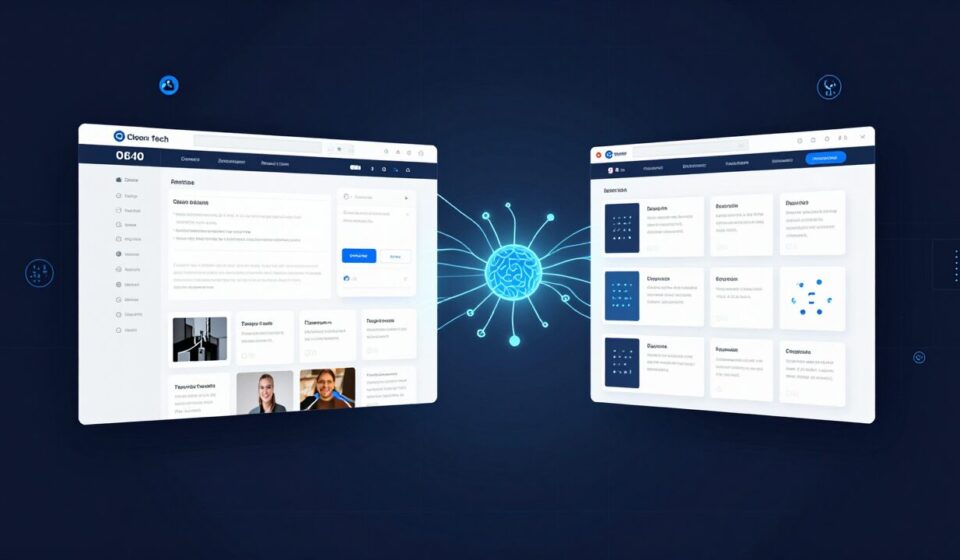
Firecrawl sits between your application and the open web. Its primary job is to take a webpage and return something an AI can genuinely work with. Navigation bars, footers, ads, cookie banners — all of that gets stripped out automatically. What comes back is the core content, formatted as Markdown or structured JSON if you define a schema.
Beyond single-page scraping, the search endpoint goes further. You give it a query and it returns full-text results, not just links. An agent can run a research task without a second round of HTTP requests to pull each page individually.
The interact endpoint is where it gets interesting for agent builders. Firecrawl can simulate real browser behavior inside the page — clicking buttons, filling forms, paginating through results, even walking through login flows. This is not screen-scraping. It is more like giving your agent a pair of hands inside the DOM.
Local file parsing covers PDFs, Word documents, Excel spreadsheets, and HTML files sitting on a filesystem. Upload the file, get back Markdown or JSON. Knowledge base preprocessing is the obvious use case here.
The async research agent handles open-ended investigation. You describe what you want to know, supply a few seed URLs or just a topic, and the agent scatters across multiple sources, collects findings, and synthesizes a summary. No manual navigation required.
What “keyless” genuinely means right now
The three endpoints that opened up without authentication are scrape (single-page extraction), search (full-text web search), and interact (browser simulation). The heavier endpoints — crawl for batch URL processing and extract for schema-guided data pulling — still require a registered key and a paid plan once free credits run out.
Daily limits exist on the free tier (rate limits and credit caps calculated per IP), though the exact thresholds are not publicly documented. For prototyping, local development, or one-off research tasks, the free allocation is practical. Teams running production workloads will still need to plan for the billing side.
Three ways to connect
MCP is the route that requires the least setup. Firecrawl runs a remote MCP server at mcp.firecrawl.dev/v2/mcp. If you are using Claude Code or Cursor, a single command connects your agent without any key shuffling:
claude mcp add –transport http firecrawl https://mcp.firecrawl.dev/v2/mcp
The CLI targets terminal-first workflows. Firecrawl CLI is distributed as an npm package runnable via npx, so there is no global installation step. Running the init command registers a local firecrawl command and also drops the corresponding skill files into your AI coding tool’s skill directory — Claude Code, Cursor, Codex, whichever you prefer.
The REST API is the most straightforward for direct HTTP calls. No Authorization header needed for the free endpoints. A scrape call looks like this:
curl https://api.firecrawl.dev/v2/scrape -d ‘{“url”:”https://example.com”}’
For a tool that built its reputation on making AI data ingestion clean, having zero-auth access removes the last friction point for developers who just want to experiment before committing to an account.
The bigger picture
Stripping the API key requirement is a small operational change, but it points at something larger. The most active consumers of web APIs are increasingly not human developers sitting at a keyboard — they are AI agents running in loops, calling endpoints without reading documentation, without creating accounts, and without storing credentials. A key-less-by-default model is better suited to that world than the developer-centric sign-up-first approach that dominated the last decade.
Firecrawl is not the first tool to arrive at this realization, and it will not be the last. But for anyone building agents that need to read the web, the barrier just got lower. Whether that means running a one-off competitive research task or wiring up a daily scrape pipeline, the entry point is now effectively nonexistent.
The free credits will not cover a production-grade data operation indefinitely. But they are enough to find out whether Firecrawl fits your stack — without opening a browser, without digging out a credit card, and without losing an afternoon to key management.
I set up the MCP connection on a Tuesday afternoon, fed it a competitor’s pricing page, and had structured Markdown in hand within three minutes. That turnaround is not unusual anymore, but it still surprises me how quickly the experiment went from idea to data. The keyless layer removes the small but real friction that used to kill side projects before they started. If you have been putting off that scraping side gig or that competitive intel pipeline, the excuse window just closed.