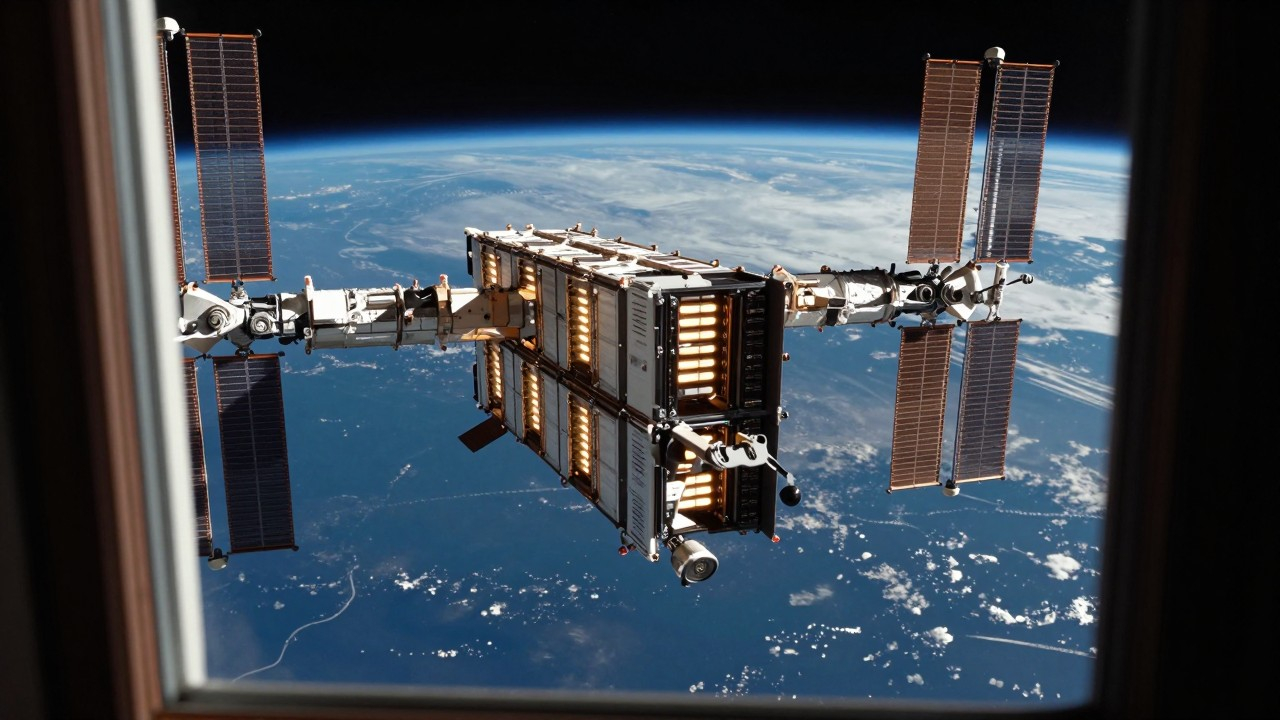
SoftBank’s CEO Just Asked the Question Everyone’s Been Afraid to Voice About Musk’s Orbital Data Centers
When Masayoshi Son, the CEO of SoftBank, publicly questioned the logic of building data centers in space, it made waves. Not because the question was new. It has been whispered in boardrooms for months. But someone finally said it out loud.
I do not think anyone else has been willing to call it out directly, one venture capitalist told me, speaking on condition of anonymity. Musk has a way of making people second-guess their own skepticism.
The argument for orbital data centers goes like this. Earth is running out of space and power for AI data centers. NIMBYism blocks new facilities. Cooling requires enormous amounts of water. Land is expensive. And Musk, never one to let bureaucracy slow him down, proposed an alternative. Put servers in space, powered by solar, cooled by the vacuum of space itself.
On paper, it is audacious in the classic Musk mold. On a podcast this week, Musk argued SpaceX could guarantee much more business for itself by building a constellation of satellites that double as data centers. Rent out the computer while the satellites are already up there, being replaced every few years.
Son’s counterpoint was blunt. Even if you assume everything works, and that is a massive if, this has not happened for years, if not decades. This is not a solution to any immediate problem, he said.
He is right about the timeline. Building a satellite constellation capable of meaningful compute delivery requires solving. Manufacturing thousands of servers designed for zero-g. Launching them at scale. Maintaining them in orbit. Handling repairs without human presence. And building the downlink infrastructure to actually deliver that compute to Earth users with acceptable latency.
For context: the fastest satellite internet today has latency around 20-40ms. A data center in Iowa has latency under 5ms. For AI inference workloads where milliseconds matter, that is not a gap you can close with better satellites.
Here is the thing that made this moment so delicious. SoftBank has a documented history of backing some of the most spectacularly bold bets in tech history. WeWork. Ofo. Katerra. The list of Son’s flameouts is almost as famous as his wins.
So when Son shows up asking hard questions about someone else’s moonshot, the tech world takes notice. Either he is genuinely reformed, or he sees something specific about the orbital data center math that does not add up.
SoftBank has a long history of making wild bets, TechCrunch’s Kirsten Korosec noted on a recent episode of the Equity podcast. It says something when Son comes up and asks the question that a lot of people have asked. I think it is an important part of the process that someone with a pretty high profile is asking that question.
What is often overlooked in the orbital data center hype? SpaceX is already quietly building a compute-leasing business without the satellites-in-space part. Post-IPO, they have signed deals to rent out GPU compute to smaller AI players, according to reporting by TechCrunch’s Tim Fernholz. It is less sexy than orbital data centers, but it actually works today.
Meanwhile, Groq, a company that was semi-hollowed out by Nvidia, as one analyst put it, is pivoting to lease out its inference chips. Even companies emerging from bankruptcy, like the former shoe retailer Allbirds, are rebranding as neo-cloud compute providers.
Everyone wants to be the company that rents out GPUs. The difference is that most of them do not need to solve orbital mechanics first.
The honest answer: partially. The long-term vision of orbital compute might be real, but the timeline being sold to investors and the media does not match engineering reality. And the immediate opportunity, renting out existing Earth-based GPU capacity, is already being captured by companies without the space headache.
Musk’s track record suggests he has earned the benefit of the doubt. But computing in space faces a different challenge than rockets. Rockets had a clear mission profile. Put things in orbit. SpaceX executed. Orbital data centers need to compete on cost and latency with data centers that are already being built, expanded, and optimized right now, on Earth, by the same customers they would be selling to.
The market will decide. But for now, Son’s question stands. What is the actual timeline, and does the math ever close?
Got thoughts on orbital data centers? Reach out. I actually read the emails.