OpenAI Is Quietly Building an Empire at Every Layer of the Stack
Three moves. No press conferences. No grand announcements. And yet, taken together, they paint a picture of a company that is systematically dismantling its own identity as a pure-play AI software company.
In the past six months, OpenAI has hired a key Apple hardware executive, re-signed a partnership with Jony Ive on a consumer AI device, and advanced work on its own custom silicon built with Broadcom. Separately, each is a data point. Together, they are a strategy.
This is what it looks like when one of the world’s most valuable AI companies decides it no longer wants to be dependent on anyone else’s hardware, anyone else’s chips, or anyone else’s distribution.
The Apple Heist Nobody Noticed
On a quiet Saturday in late June, Bloomberg reported that Paul Meade, Apple’s vice president in charge of Vision Pro, was leaving to join OpenAI’s hardware team. Most tech news consumers skimmed past it during their weekend. That was a mistake.
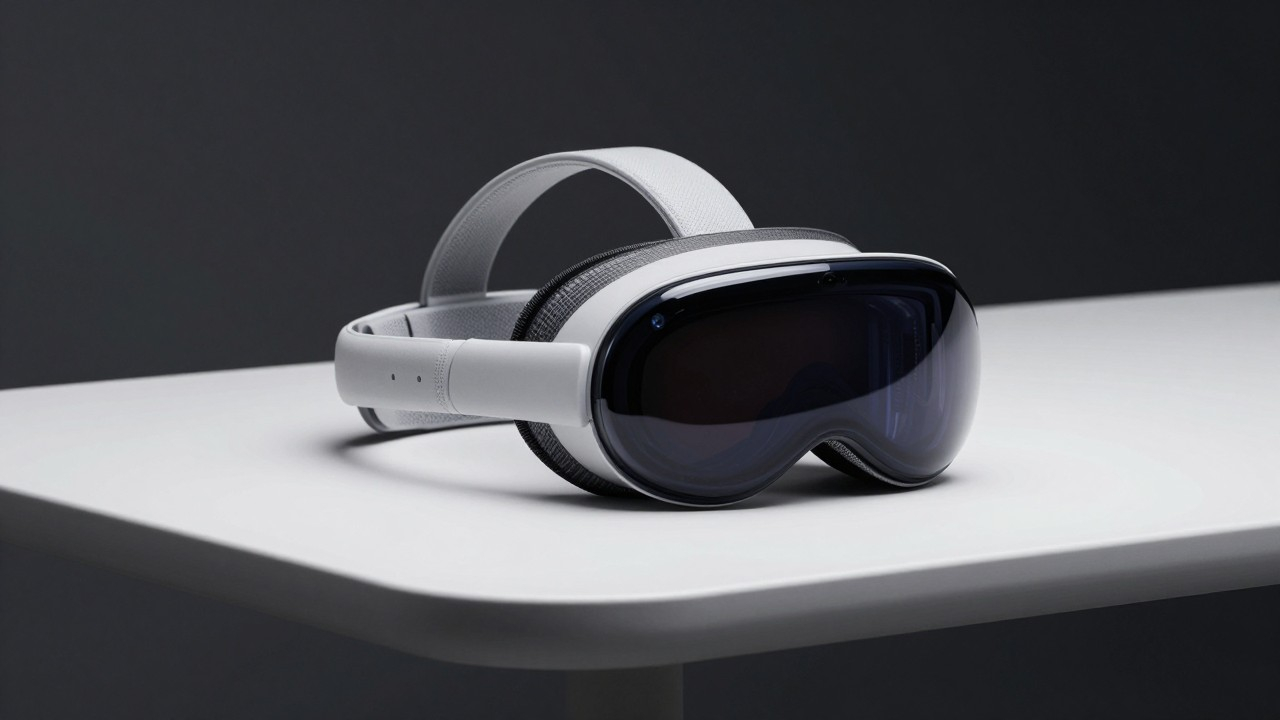
Meade spent years turning Apple’s mixed reality headset from an inside joke into something people actually wear in public. Spatial computing. Eye tracking. Hand gesture recognition. Thermal management that keeps a powerful computer comfortable against your face for hours. These are not easy engineering problems, and Meade is one of the few people who solved them at scale.
His departure, according to Mark Gurman, is tied to a broader Apple leadership shakeup. John Ternus, widely expected to become Apple’s next CEO, has been restructuring the hardware organization. Some vice presidents felt they were being quietly demoted. Meade decided his next chapter was somewhere else.
That somewhere else is OpenAI. And the timing is not random.
Apple is still planning to launch more affordable smart glasses next year, designed to compete with Meta’s Ray-Ban line. Meade led that project too. OpenAI just acquired someone who knows how to ship consumer hardware that people do not immediately take off.
The Jony Ive Thread
OpenAI’s hardware ambitions are not starting from zero. The company has been working with Jony Ive, Apple’s former chief design officer, on an AI device that Sam Altman has described as more peaceful and calm than an iPhone.
Reports last fall suggested the project was struggling. Getting the details right was harder than anyone expected. Consumer hardware has a way of humbling software companies that underestimate it.
But the partnership did not end. It evolved. With Meade now on the team, the engineering execution gap that was reportedly plaguing the Ive collaboration started to close. You can have the best industrial designer in the world. You still need someone who knows how to turn a design into a product that ships.
This is what OpenAI now has: Ive’s design vision and Meade’s execution track record. Two halves of a hardware capability that almost no other AI company can match.
The Chip Beneath the Surface
Software and talent are one layer. Silicon is another.
Earlier this year, The Information reported that OpenAI is building its own AI chip, codenamed Jalapeño, in partnership with Broadcom. The goal: reduce dependence on Nvidia, which controls roughly 80% of the AI training chip market and has been unable to keep up with demand.
The economics are stark. Training a frontier model costs hundreds of millions of dollars. Nvidia’s H100 and B100 GPUs are scarce, expensive, and in some cases allocated years in advance through personal relationships. For a company that wants to control its own destiny, relying on a single supplier for the most critical component in your stack is a strategic vulnerability.
Building custom silicon with Broadcom is a middle path. You use Broadcom’s chip manufacturing expertise without trying to become Intel or TSMC yourself. If Jalapeño works, OpenAI joins a short list that includes Google (TPU), Amazon (Trainium), and Meta (MTIA) as companies that have built their own AI accelerators.
Whether Jalapeño will actually close the gap with Nvidia’s latest is an open question. What matters is the intent. OpenAI is making a long-term bet that vertical integration at the silicon layer will be table stakes for frontier AI companies within five years.
Why This Is Not Just Diversification
There is a surface reading of these moves that sounds like standard portfolio diversification. A little hardware, a little silicon, some design partnerships. Any well-capitalized tech company might do the same.
That reading misses the urgency.
Consider the competitive landscape. Anthropic, backed by Google and Amazon, is moving toward an IPO at a valuation that has reportedly surpassed OpenAI’s last private round. Google’s Gemini is iterating rapidly. Meta is shipping AI across its entire family of products. Microsoft, OpenAI’s biggest strategic partner, is also building its own Copilot+ hardware.
In this environment, being a pure API company is a race to the bottom on margins. More users means more inference costs. More inference costs mean you are always one price war away from being squeezed between compute bills and customer expectations.
Hardware changes the equation. If OpenAI controls the device, it controls the distribution. If it controls the silicon, it controls the cost structure. If it controls the user interface layer, it controls the relationship. None of these are guaranteed to work. But the alternative, staying purely a model API, is increasingly looking like a commodity business waiting to happen.
The move toward vertical integration is also a move toward defensibility. Software can be copied. Model weights can be extracted. API access can be revoked. But a physical device that people carry, a custom chip that runs your models more efficiently than competitors’, a design partnership that took years to build: these are harder to replicate.
The IPO Problem Makes This More Urgent
Here is the part that adds pressure from an unexpected direction.
As 36Kr reported this week, OpenAI is considering delaying its IPO. The number being talked about inside the company is $1 trillion. Advisors have reportedly told Sam Altman that the current environment, particularly the post-SpaceX public market psychology, does not support that valuation. SpaceX, which went public earlier this year at a $1.77 trillion valuation, has since fallen below its opening price.
Altman’s response, according to multiple reports, has been consistent: $1 trillion, no negotiation.
What this means in practice is that OpenAI is spending more time in private markets than originally planned. It raised $122 billion in its last round. It is burning cash at a significant rate. And it is doing so with a higher cost structure than a lean AI startup because it is simultaneously funding model research, compute infrastructure, and now, hardware.
This creates a particular kind of pressure. Private investors expect returns eventually. The longer OpenAI stays private, the more equity dilution happens, the more complicated the governance becomes, and the more pressure mounts to show a path to profitability that does not rely on perpetual fundraising.
Hardware is not a philanthropy project. It is a potential answer to that pressure. A successful consumer device with OpenAI’s brand and distribution could generate hardware margins that pure software cannot match. A custom chip could materially reduce inference costs, improving unit economics across every product line.
The Jalapeño chip, the Jony Ive partnership, the Meade hire. They are not separate bets. They are three threads of a single strategy to build a company that looks less like a startup and more like an infrastructure empire. The difference matters because infrastructure companies trade on different multiples than software companies. They are valued for physical assets, distribution relationships, and ecosystem lock-in that is harder to replicate than a model weight.
What This Means for the Rest of the Industry
OpenAI’s pivot toward vertical integration will not go unnoticed.
Google built its first TPUs over a decade ago. Amazon’s Trainium chips are already in its data centers. Meta has been quietly building its own silicon for years. Microsoft, Apple’s next moves in AI hardware remain unclear, but the company that once tried to buy Apple instead of compete with it is not going to ignore the lesson.
What is different about OpenAI’s entry is the speed and the narrative. Google and Amazon built chips for internal use. Meta built them partly for competitive reasons. OpenAI is building hardware at a moment when it is simultaneously the most visible AI company in the world, under the most competitive pressure, with the most ambitious timeline for an IPO that requires extraordinary multiples.
If it works, OpenAI becomes the first pure-play AI company to successfully vertically integrate across models, silicon, and devices. That would be a significant moat, if it materializes. A consumer device that ships with OpenAI’s models pre-installed creates a distribution channel that no API-only competitor can match. A chip that runs those models 30% more efficiently than Nvidia’s commodity offering changes the unit economics of every inference call. A hardware team led by someone who shipped Vision Pro changes what is possible in the next eighteen months versus the next five years.
If it does not work, the company will have burned billions on hardware projects that failed to ship while its core model business faced increasing competition from Anthropic, Google, and open-source alternatives. The opportunity cost of that capital, deployed in research or infrastructure instead of hardware, would be impossible to calculate in hindsight. Some board members will ask whether the $122 billion was better spent defending the model lead than building a consumer device nobody asked for.
The next twelve months will tell us a lot. For now, watch what OpenAI does with Paul Meade. Watch whether the Ive device actually ships. Watch whether Jalapeño is real silicon or just a PowerPoint slide. These are the load-bearing walls of the new strategy. Everything else follows from whether they hold.
The smart money is watching the execution, not the announcement. And the execution, unlike the press release, takes time to reveal itself.
—
Marcus Rivera covers AI infrastructure and chip technology. You can reach him at the email on this publication’s contact page.