Google Just Rewrote the Search Box for the First Time in 25 Years
# Google Just Rewrote the Search Box for the First Time in 25 Years
*For a quarter century, the Google search box was one of computing’s most iconic — and unchanged — interfaces. That’s over now.*
The one-sentence verdict: At I/O 2026, Google replaced its iconic keyword input with an AI-powered conversational interface that accepts text, images, PDFs, videos, and even open Chrome tabs. The entire search paradigm just shifted.
The Box That Changed Everything — And Hasn’t Changed Until Now
For 25 years, the Google search box was a monument to minimalism: a thin white rectangle, a blinking cursor, a few typed words, a list of blue links.
It worked. Two to three keywords, usually. Millions of results. Google became the front door to the internet for billions of people.
On Tuesday, Google retired that paradigm — not with a whimper, but with a full redesign of the literal text field where billions of queries begin every day.
What Actually Changed
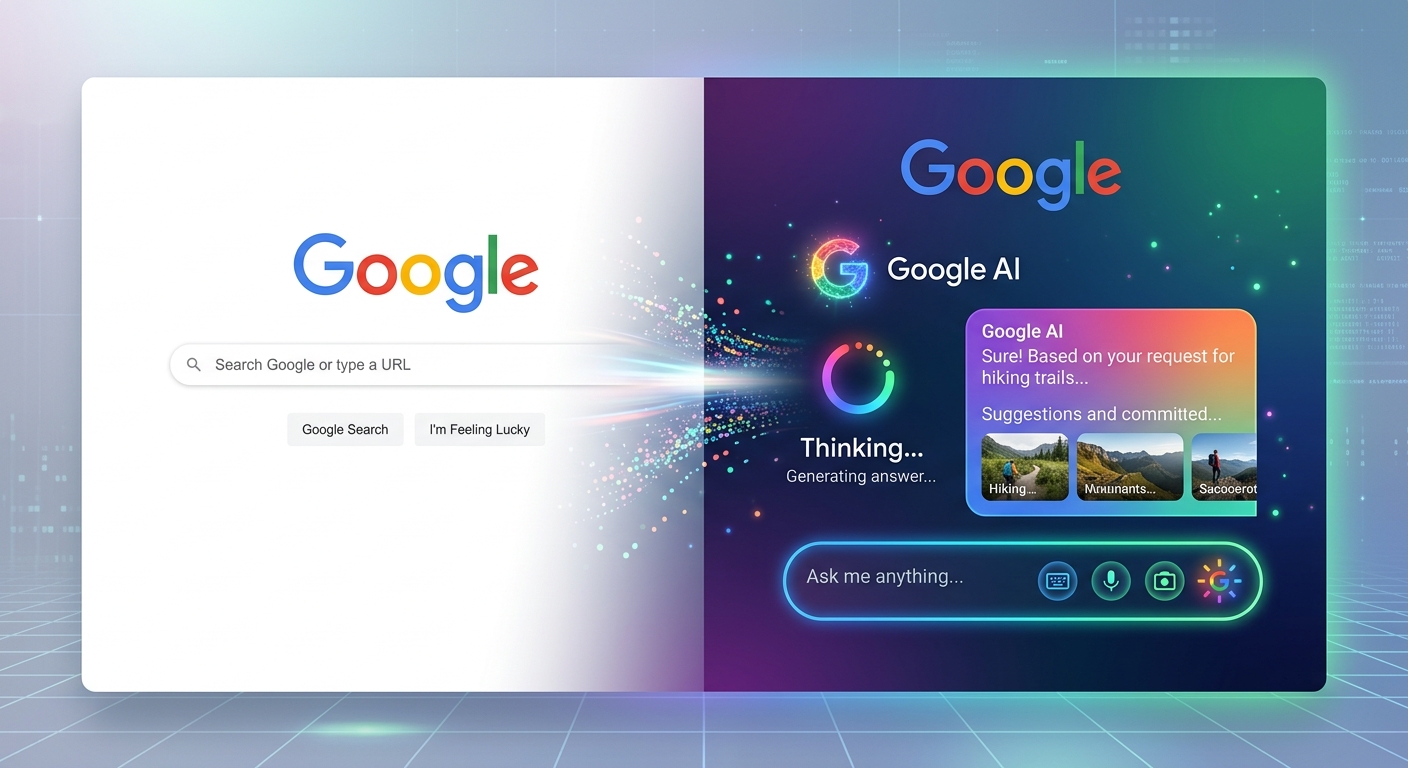
The old search box encouraged brevity. A narrow field suited to “weather Beijing” and “Elon Musk age.” Shorter was better. Fragmented keywords were the norm.
The new design does the opposite:
Multimodal from the start. The box now accepts text, images, PDFs, videos, and open Chrome tabs as valid inputs. Upload a screenshot and ask “what is this?” — it understands.
Dynamic expansion. The box grows to accommodate long, conversational queries. Where the old UI subtly punished complexity, the new one invites it.
AI Mode merged with standard search. Previously, users had to choose: standard results or AI Overviews. Now they’re the same flow.
The back-button problem, solved. Google’s VP of Search Liz Reid called it “the biggest upgrade to our iconic search box since its debut over 25 years ago” — and the numbers suggest she wasn’t exaggerating. At its peak, AI Mode handled queries that previously would have sent users to Reddit or Quora for real answers.
Why This Matters More Than You Think
Google Search generates the vast majority of Alphabet’s revenue. Every change to that experience is a big deal — for users and for the company’s financials.
But the real significance goes deeper:
Google is finally treating search as a conversation, not a lookup.
The old model was transactional: keyword in, links out. The new model is conversational: question in, understanding out. It doesn’t matter if the user asks about a product, a disease, a legal question, or a recipe — the system meets them in their natural language, not a keyword approximation of it.
The interface shapes how people think about their information needs. When you can ask “what’s a good restaurant near me that’s open late and has vegetarian options” instead of “restaurant open late near me vegetarian,” you start asking better questions. That’s a behavioral shift — and it changes what Google can actually help with.
What’s Under the Hood
Behind the redesign: Google’s Gemini models powering a unified search experience. AI Overviews and AI Mode aren’t competing products anymore — they’re one system.
The implications for SEO and content discovery are significant:
– Long-tail conversational queries become first-class citizens
– Multimodal searches (images + text) increase dramatically
– Direct answers replace more blue links — publishers that haven’t adapted will see traffic declines
The Competitive Pressure Nobody Talks About
This didn’t happen in a vacuum. Perplexity has been eating Google’s lunch on complex, conversational queries. ChatGPT’s browsing capabilities have been improving. The market made it clear: a keyword box with blue links isn’t enough anymore.
Google’s response wasn’t defensive — it was architectural. The company decided the search box itself had to change, not just the results behind it.
Our Take
The Google search box redesign is the most consequential UI change in consumer internet history — and most people won’t realize why until six months from now when they can’t imagine going back.
For AI content publishers: this is a wake-up call. Conversational, comprehensive content that actually answers questions is only going to grow in importance. Keyword-stuffed listicles won’t disappear, but they’ll fall further.
For users: the new search box is genuinely better for complex, real-world questions. The old “I’ll Google it” reflex just got a serious upgrade.