Small but Mighty: Liquid AI’s 230M Parameter Model Beats Models 4X Its Size
The Underdog Story Nobody Expected
When Liquid AI dropped its newest model this week, the headline alone raised eyebrows: a 230-million-parameter model outperforming models with 4X more parameters.
On paper, that shouldn’t work. The AI industry has been drunk on scale for years — more parameters, more data, more compute. The assumption was always: bigger is better.
Liquid AI just challenged that assumption with a concrete number: their LFM2.5-230M beats Alibaba Qwen3.5-0.8B and Google Gemma 3 1B on data extraction benchmarks. Both competitors have roughly 4X the parameters.
What Makes This Model Different
Most small AI models are just that — small versions of transformer architectures, pruned and quantized until they fit on a phone. They sacrifice capability for size.
Liquid AI took a different architectural path. Their LFM (Liquid Foundation Model) architecture isn’t a compressed transformer. It uses a different mathematical structure that the company says achieves high inference speeds without the memory overhead that plagues parameter-heavy models.
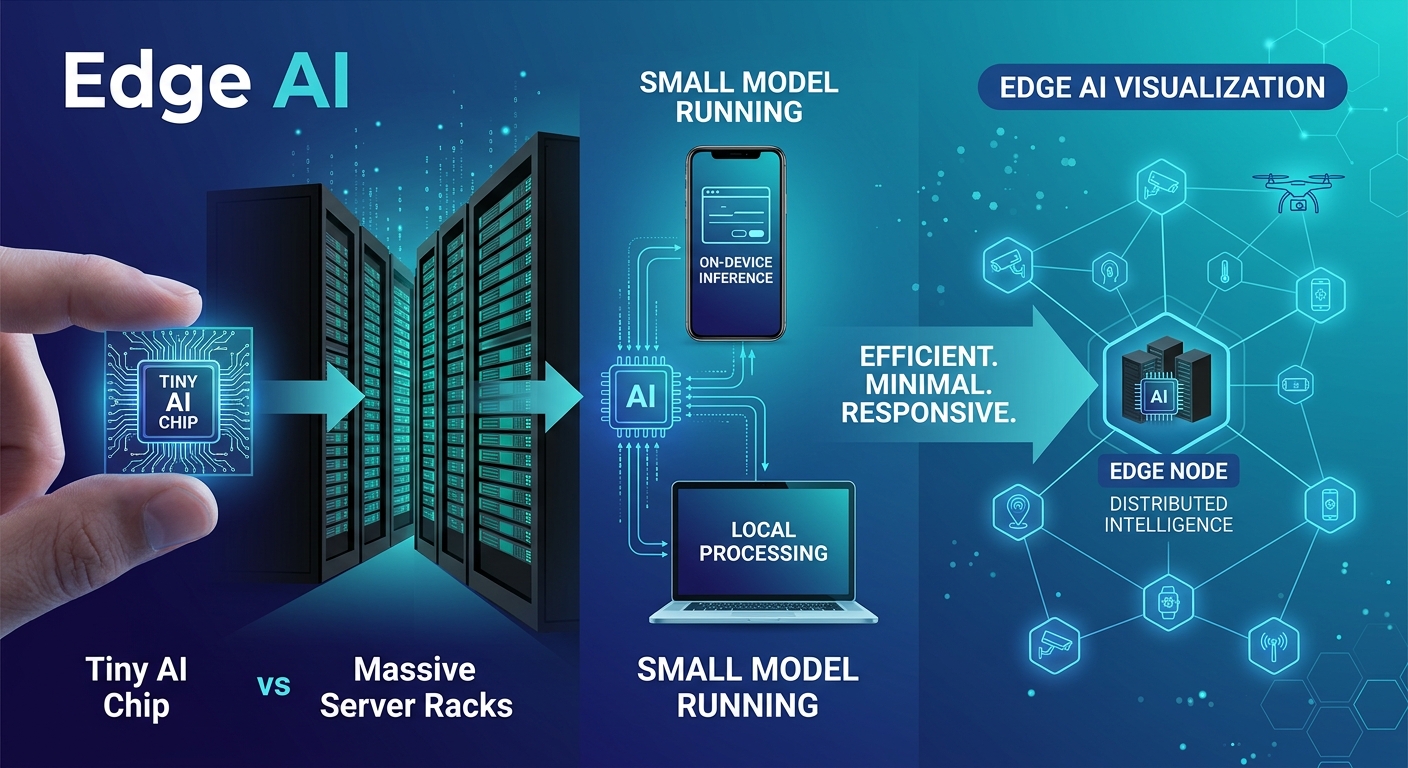
The implications for edge deployment are significant:
– Smartphones: No round-trip to the cloud for data extraction tasks
– Laptops: Run local AI pipelines without burning through battery and RAM
– Robotics: On-device reasoning for autonomous systems where latency matters
– Enterprise local deployment: Keep sensitive data on-premise without sending it to an API
The Benchmark Reality Check
It’s worth noting these are selected benchmarks — Liquid AI is comparing against models they chose to look good against. Independent, third-party testing hasn’t confirmed these numbers in the wild.
That said, the underlying architecture claim is interesting regardless of the specific benchmarks. Architectural efficiency over brute-force scaling is a real trend, not just marketing.
Who’s Actually Building This
Liquid AI was founded by former MIT computer scientists. They’re not a household name like OpenAI or Anthropic, but they’ve been building quietly in the foundation model space for a while now.
Their business model: dual-use commercial license
– Free for individuals and companies earning under $10M/year
– Paid enterprise agreement for larger corporations
This is a clever positioning — capture the developer community and independent researchers while charging the enterprise buyers who need SLA and support.
Why This Matters for the AI Landscape
Two parallel races are happening simultaneously in AI right now:
Race 1: Frontier scale — Anthropic, OpenAI, Google, Microsoft, Meta pushing parameter counts into the hundreds of billions, chasing benchmark dominance
Race 2: Edge efficiency — A quieter group of companies focused on making AI work in resource-constrained environments without sacrificing meaningful capability
Liquid AI is firmly in Race 2. And the timing makes sense: as AI proliferates into smartphones, IoT devices, and enterprise edge deployments, the “must run in a data center” constraint becomes a liability, not just an inconvenience.
What This Means for Developers
If you’re building AI-powered features that don’t require frontier-level capability:
You have more options than you think. A 230M parameter model that runs on a laptop opens up use cases that were previously impossible without cloud API calls — real-time document processing on-device, privacy-sensitive AI that never leaves the user’s device, offline AI features.
The licensing model matters. Liquid AI’s free tier for small companies and individuals is unusually permissive. Before defaulting to OpenAI or Anthropic for every task, it worth checking whether a purpose-built small model handles your specific use case.
Watch for independent benchmarks. The numbers in the press release are cherry-picked. Real-world performance on your specific task is the only benchmark that matters.
The Honest Take
230 million parameters beating models 4X its size is a compelling headline. Whether it holds up in production use cases — not benchmark tasks — is the real test.
But the trend direction is clear: not every AI task needs a trillion-parameter model. The AI industry is starting to fragment into use-case-specific solutions, and architectural efficiency is becoming a competitive advantage, not just a constraint.
The next time you’re building an AI feature, ask yourself: do I actually need the biggest model, or do I need the right model for this specific job?
Sometimes the answer is “smaller.”