Skip to content
AIForker

AI Tools, Tutorials, and Insights。

AIForker

AI Tools, Tutorials, and Insights。

  • Home
  • AI Tool Reviews
  • AI Guides
  • AI Agent
    • Codex
    • Hermes
    • Openclaw
    • Claude Code
    • Gemini
  • China AI
    • DeepSeek
    • GLM
    • Qwen
    • Doubao
    • MiniMax
    • Seedance
    • Kimi‌
    • iFLYTEK Spark
  • AI Prompts
  • About Us
  • Home
  • AI Tool Reviews
  • AI Guides
  • AI Agent
    • Codex
    • Hermes
    • Openclaw
    • Claude Code
    • Gemini
  • China AI
    • DeepSeek
    • GLM
    • Qwen
    • Doubao
    • MiniMax
    • Seedance
    • Kimi‌
    • iFLYTEK Spark
  • AI Prompts
  • About Us
  • https://www.facebook.com/
  • https://twitter.com/
  • https://t.me/
  • https://www.instagram.com/
  • https://youtube.com/
Home/AI News/OpenAI Bidirectional Voice Mode Lets You Actually Interrupt ChatGPT
AI News

OpenAI Bidirectional Voice Mode Lets You Actually Interrupt ChatGPT

By Forker
June 28, 2026 2 Min Read
0
Updated on June 29, 2026

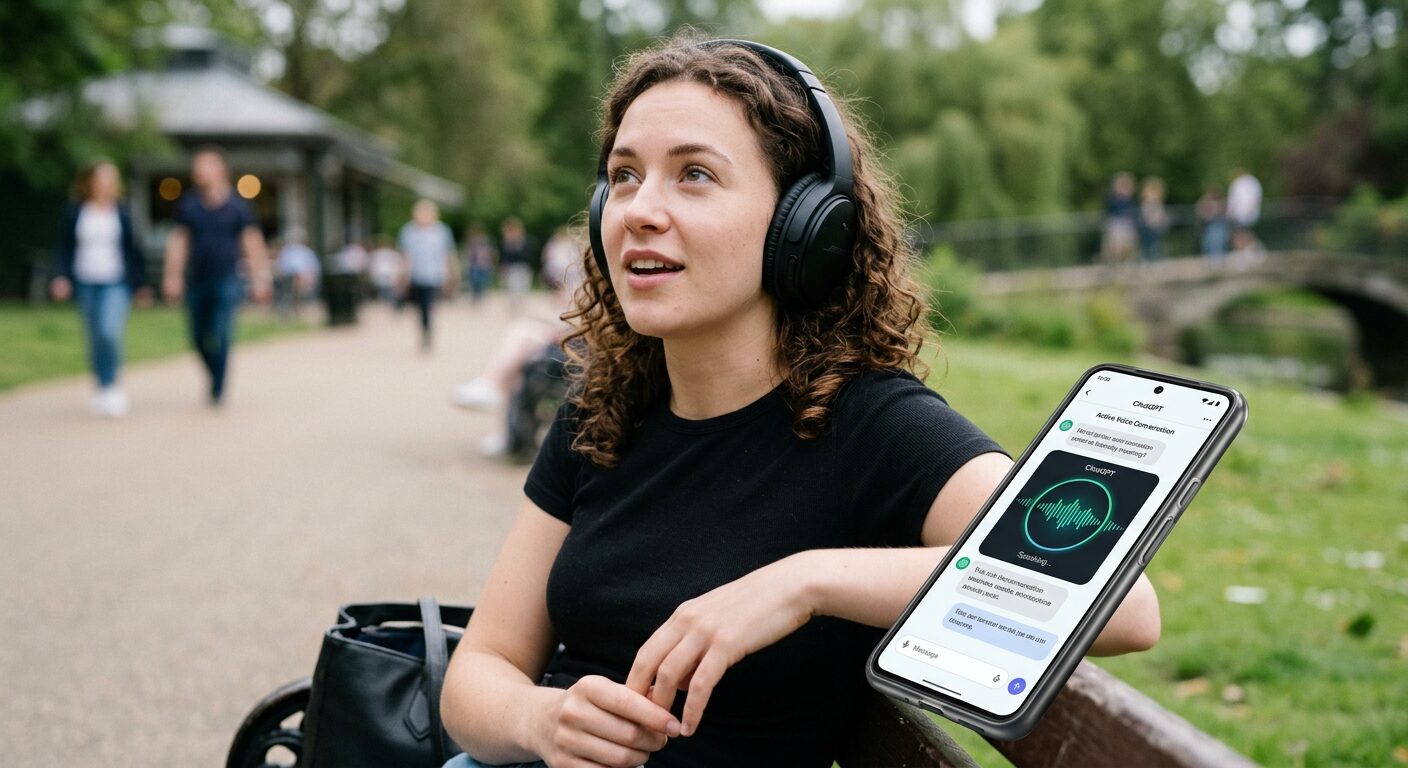
OpenAI is rolling out Bidirectional Voice Mode for ChatGPT, and it is a meaningful upgrade to how people actually use voice interfaces. Previous voice modes were essentially walkie-talkies: you speak, it responds, you speak again. Bidirectional mode allows for the kind of overlapping conversation that happens between humans — including interruptions, mid-sentence clarifications, and the back-and-forth that defines actual dialogue.

The underlying audio processing is different from previous modes. It handles overlapping speech, background context, and the subtle cues humans use without conscious thought. Previous systems required strict turn-taking, which felt unnatural in a way that undermined the sense of presence. This is not just a latency improvement — the model is processing a fundamentally different kind of input.

The practical applications go beyond the demo. Real-time translation becomes genuinely useful when you can have a conversation rather than taking turns reading translations aloud. Customer service AI that can handle interruptions and mid-thread clarifications is more usable than one requiring carefully formatted inputs. A therapy AI that cannot be interrupted is not very therapeutic. An interview AI that requires you to wait for a full response before asking a follow-up is not very useful for interviewing.

Context retention across longer conversations is also improved. Previous voice sessions would lose coherence as they extended — the system would simply forget earlier context. Bidirectional mode maintains coherent context across extended exchanges, which matters for any use case that involves meaningful dialogue rather than single queries.

Whether this represents a genuine architectural advance or primarily a UI change in how audio is processed — that distinction matters for evaluating the approach long-term. For now, the results in actual use are what count. Early impressions suggest it is more than cosmetic.


Related Articles:

  1. Listen Labs Raised 69M Making AI Voice Data Collection Actually Ethical
  2. Turn Any Photo Into a 3D Model: The Tech That’s About to Change E-Commerce
  3. How to Share Skills Across Multiple AI Agents
  4. AI’s Dirty Secret: Power Semiconductors Are the Bottleneck Nobody Is Talking About
  5. Big Tech Is Quietly Ditching Nvidia — and Building Its Own Future
  6. Perplexity Brain Wants to Give AI a Persistent Memory. I Have Questions.

Tags:

ChatGPTOpenAIai-chatbot
Author

Forker

Follow Me
Other Articles
Previous

Big Tech Is Quietly Ditching Nvidia — and Building Its Own Future

Next

Goose Is a Free AI Coding Agent — and It’s Worth a Look Before Paying

No Comment! Be the first one.

Leave a Reply Cancel reply

Your email address will not be published. Required fields are marked *

Latest Articles

  • Codex + OpenMontage Made Me Throw Out My Editing Software
  • 10 Open Source Scrapers That Do What Paid APIs Do
  • Hermes Agent v0.20.0: It Finally Learned to Talk Back
  • PhotoGIMP: How I Turned GIMP into a Free Photoshop Clone
  • 8 Gemini Notebook Prompts That Actually Work
  • How I Built My Own Automation Hub (And the Problems That Nearly Stopped Me)
  • Hermes v0.19.1 Quietly Fixes the Frictions That Annoy You Most
  • Five AI Agents, One Trading Decision: The Architecture Behind the 95K Stars

Categories

  • DeepSeek
  • Qwen
  • GLM
  • Kimi‌
  • Codex
  • Hermes
  • Openclaw
  • Claude Code
  • Gemini
  • Hunyuan
  • China AI
  • AI Agent
  • AI Prompts
  • AI Tool Reviews
  • AI Guides
  • AI News

Tags

AI agent collaboration AI agent memory AI benchmarks AI coding assistant memory AI coding tools AI coding workflow AI context window AI dashboard AI deployment AI implementation AI models AI orchestration AI policy AI privacy AI security alternative AI hardware Anthropic ChatGPT Claude Claude coding Claude Tag Copilot cybersecurity developer tools FLUX GitHub code diagram knowledge management LLM LLM security local-first long context AI Midjourney Notion alternative Obsidian OpenAI OpenClaw open source open source AI persistent AI prompt-injection real AI coding agents Slack AI spreadsheet automation US government AI vetting workflow engine

About

Latest AI industry news and trend analysis, as well as tool evaluations.

Quick Links

  • About AIForker
  • Contact
  • How We Test
  • Privacy Policy
  • Tags

Category

  • AI NEWS
  • AI TOOL
  • AI GUIDES
  • CHINA AI
  • AI PROMPTS
Copyright2026 — AIForker.com. All rights reserved.