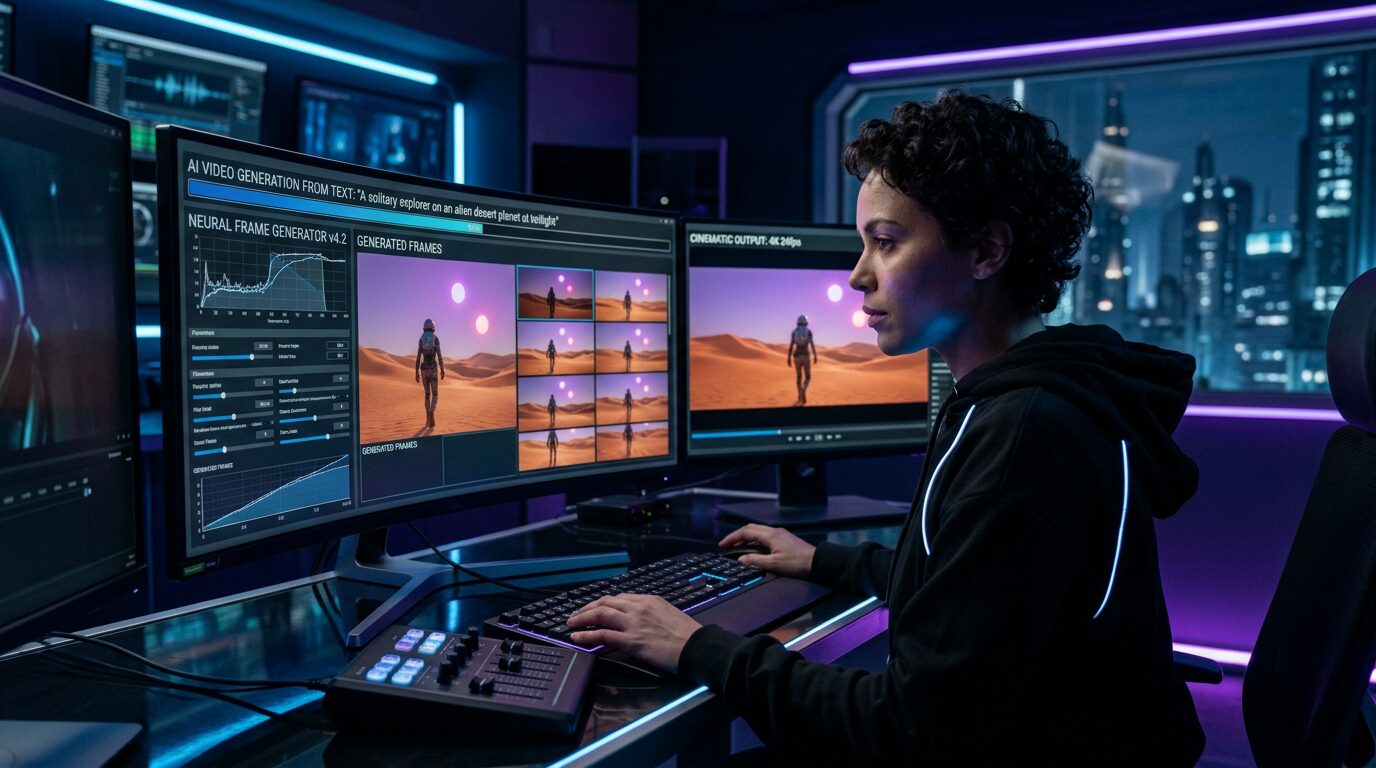
AI Video Is Getting Seriously Fast — And This New Model Is Why It Matters
I spent $40 on AI video generation last month and got about 90 seconds of usable footage. Most of it was glitchy garbage — faces that melted halfway through, hands with seven fingers, backgrounds that rearranged themselves between frames. The 10 seconds that were actually good made me think the technology was almost there. Almost. That was a month ago. Things are moving faster than I expected.
The latest model making noise is LTX-2.3-turbo. The pitch: higher quality video in fewer steps. Fewer steps mean lower compute costs and faster iteration. For video generation, that shift is the difference between “I can afford to experiment” and “I’m only going to generate one version because each try costs me real money.”
Why Speed Is the Actual Breakthrough
Everybody talks about quality when they talk about video AI — resolution, coherence, and how many frames don’t glitch. Quality improvements have been arriving on a predictable curve for three years. Speed is where it gets interesting.
Creative work is iterative. A director doesn’t shoot one take. A motion graphics artist doesn’t render one version. When AI video takes 60 seconds per second of output, you can’t afford to experiment freely. When it takes 5 seconds, you can generate twenty variations before lunch. The creative process changes when the cost of trying something weird approaches zero.
LTX-2.3-turbo is sitting at that inflection point. Early testers report that it maintains visual consistency across longer sequences, which has been the persistent weakness in video generation. Faces stay faces. Hands stay hands. Backgrounds stay in place. That’s the quality threshold that separates “impressive demo” from “actually usable in a real workflow.”
The question is how it handles complex scenes. Fast generation on simple B-roll is one thing. Fast generation of complicated multi-character scenes with camera movement is another. I want to see more test footage before I say this solves the hard problems.
Who’s Going to Use This First
It’s not a laptop tool yet. The hardware requirements are still significant. But the economics are shifting the same way image generation shifted from 2022 to 2024.
Social media content creators are the obvious first beneficiaries — they need B-roll and visual effects without After Effects budgets. Advertising agencies prototyping at the storyboard stage. Game studios generate cutscenes or environmental assets. E-commerce brands making product videos at scale without production crews. These are all real use cases with real budgets and real pain points today.
The film industry will take longer. The workflows are more entrenched, and the quality bar is higher. But the transition in advertising and short-form content is already underway, and it’s moving faster than most industry observers expected 18 months ago. I’ve talked to a few producers who are quietly testing these tools and not talking about it publicly because they don’t want to be the company that “admitted” they were using AI.
What Happens in the Next Twelve Months
The trajectory is clear: AI video quality will reach professional-adjacent levels within a year, and the speed will follow the same exponential improvement curve that image generation experienced.
The studios treating this as a threat and refusing to experiment are making a mistake. The ones treating it as a production capability multiplier — building internal expertise now — will have a meaningful advantage when the technology crosses the next quality threshold.
For working creators, the question isn’t whether to engage with these tools. It’s how to integrate them without sacrificing the creative voice that makes their work distinctive. That part is still entirely human. The tools amplify what’s already there; they don’t replace it.
I’ll have more specific test results once I’ve spent real time with the models. The $40 I spent last month was worth it just to understand what’s coming. It’s closer than most people think.