ChatGPT is a Mouth, Hermes is Hands: How China Is Quietly Winning the AI Agent Race
If you have spent any time in Western AI circles, you know the conversation. People argue about which model is smartest, whether Codex will replace junior developers, whether GPT-5 will finally pass the bar exam. The frame is always the same: AI as a prodigy to be evaluated.
China could not care less about that conversation.
In a post that spread through Chinese tech blogs in June 2026, one writer cut through all of it in a single line: ChatGPT is a mouth. Hermes is hands and a mouth. That was the whole thing. And it was a more useful frame than anything that came out of an American tech publication that year.
The post was called “Your Grandmother Can Learn Hermes—Free and Open Source.” Six installments. Screenshot by screenshot, button by button. No command lines. No API keys buried in documentation. Just steps a person who could barely send a voice message on WeChat could follow.
That part is easy to skip over. Do not skip it.
The second wave was quieter. A six-month field report from someone who had been living with Hermes every day. China’s DeepSeek as the reasoning engine. China’s Qwen3-8B handling the summarize-and-compress background work. Alibaba Cloud’s Bailian for memory that survived across sessions and devices. WeChat as the interface, because any user there was already on WeChat forty times a day regardless.
No flashy skills. No agent crews. No system prompt personas dressed up as celebrities.
The philosophy was less is more. I keep coming back to that.
Omnipotence was never the goal. The goal was an agent that was there when you reached for it.
This is not a story about technology. It is a story about a gap Western observers have mostly failed to notice.
The Tutorial That Went Viral
The tutorial ran through six posts. The first explained what Hermes actually was. Not a chatbot. A persistent agent. One that could read files, check web pages, set reminders, and be reached from a phone. The analogy was not accidental: if ChatGPT is a receptionist who answers questions, Hermes is an employee who does tasks. Tell it what to do. It does it. It remembers what it learned.
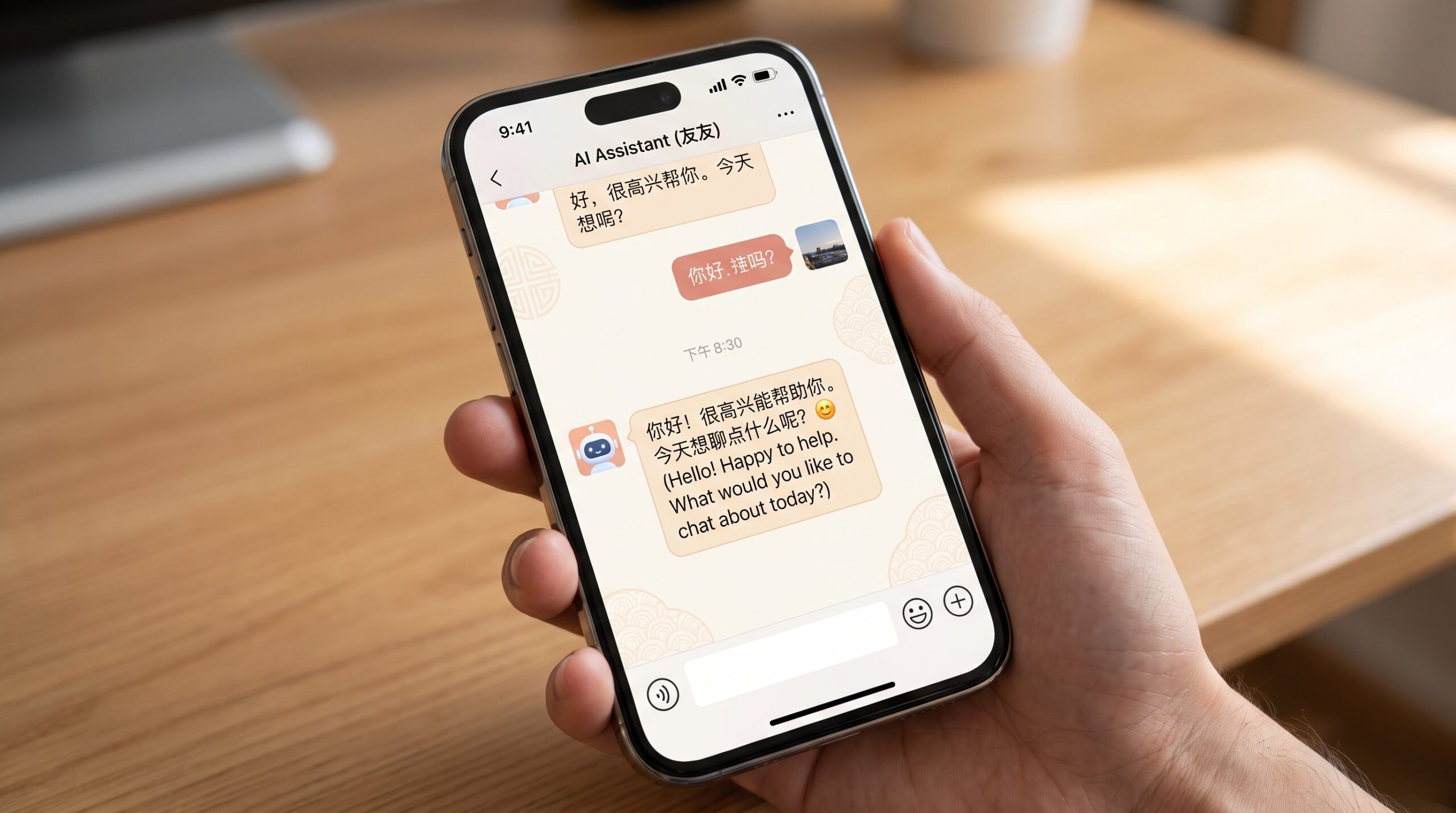
The tutorial walked through the complete setup. macOS and Windows. Daily usage patterns. How to drop files into a chat and have the agent process them. Memory and personalization. Tell the agent your preferences once, and it never needs to be told again. Mobile integration with Telegram, WeChat, and Feishu. Scheduled tasks. A daily AI news digest at 9 am. A reminder check at 8 pm.
What set it apart from standard open-source documentation was the tone. There were no phrases like execute the following in your terminal. Every instruction read like: click the settings icon on the left, paste this into the box labeled API Key, click save. Screenshots at every step. Metaphors for every concept. Models were the brain. Tools were hands and feet. Memory was the notebook.
The entire six-post series was free. No paywall. No email capture. No upsell.
Within days, it had been shared across dozens of China’s tech communities. People were screenshotting the guides and sending them to older relatives. One widely-repeated anecdote described a user who had set up Hermes for a parent who could barely navigate WeChat. The parent was having the agent summarize news every morning within a week.
I mean. That is not a niche outcome. That is a different kind of person using AI than the benchmark conversation assumes exists.
The Six-Month Report
If the first post was the onboarding manual, the second was the field report.
The writer had started with OpenClaw. Found it too demanding for daily use. Switched to Hermes. Spent a few weeks tuning the setup.
The result was modest by AI power-user standards. China’s DeepSeek for general conversation and reasoning. China’s Qwen3-8B from SiliconFlow, free tier, handling light tasks: summarizing web pages, compressing conversation history to save on token costs. A vision model from China’s Zhipu AI for image understanding. Alibaba Cloud’s Bailian for persistent memory across devices.
The tool stack was similarly unassuming. A map service from China for weather and directions. A popular to-do app from China for task management and scheduled reminders. Obsidian for note-taking. Local Markdown files, no cloud sync lag. Feishu spreadsheets for daily logs that Hermes would populate each evening automatically. QQ Mail for occasional email checks.
None of this required a computer science degree. None of it cost much.
The goal was not an impressive showcase. The goal was an agent available, reliable, and integrated into the routines of ordinary life.
According to the account, two automated tasks ran without any intervention. One processed the day’s conversations at 4 am and logged the results. One checked for missed to-dos at night. The system handled it. That was the point.
You know what surprised me most about this? The tasks were not complicated. They were barely tasks at all. And that is exactly why they worked.
The Western conversation mostly misses this. The value of an AI agent is not measured in benchmark scores or parameter counts. It is measured in whether a normal person, with an ordinary smartphone and no technical background, can set it up once and then forget about it.
Because the agent has become part of the routine.
The WeChat Signal
In March 2026, Tencent integrated OpenClaw into WeChat. Western publications treated this as a novelty. Look, China is experimenting with AI agents inside messaging apps. The Chinese press treated it as confirmation of something they had already accepted as true.
WeChat is not a chat app in China. It is an operating system for daily life. Billions of messages, payments, official accounts, transportation tickets, healthcare appointments. All inside one icon on a home screen.
Adding an AI agent to that is not a bet on the future. It is an acknowledgment of where people already live.
Tech press coverage framed the debate around persistent memory versus session-based context loss. Real engineering distinctions. The more telling fact was that in China, the question had already been settled by usage. People were not debating whether a messaging platform was the right home for an AI agent. They were debating which messaging platform and which agent.
Hermes had something that does not show up in benchmark tables. It was lightweight enough for consumer hardware. Flexible enough to connect to WeChat. And there was enough Chinese-language documentation and community support that non-engineers could actually debug it when things went wrong.
The technical work had been done. Ordinary users were simply living with the results.
The Philosophy Underneath
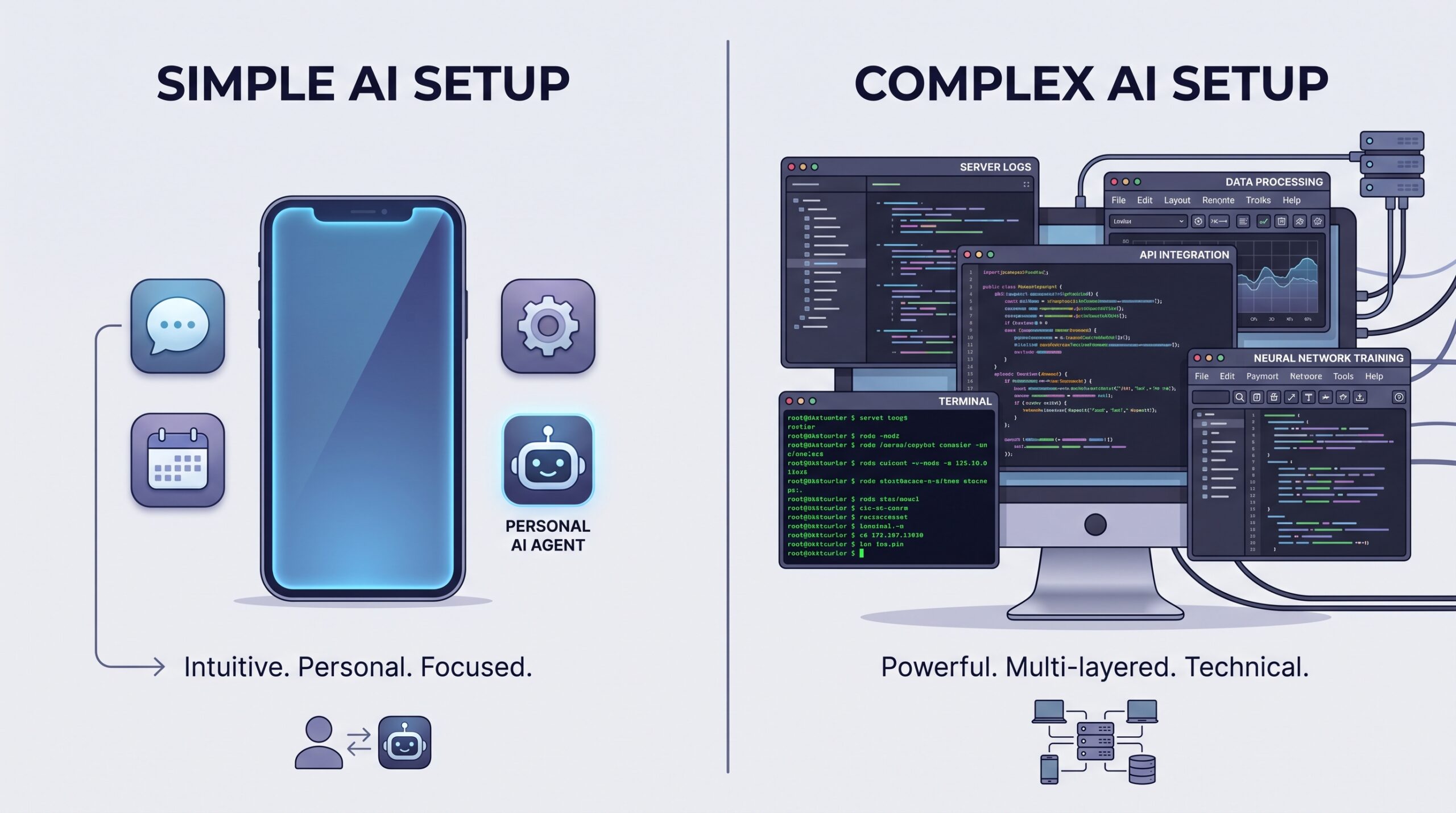
What is most striking about both accounts is not the tools or the configurations. It is the philosophy underneath.
The tutorial was explicit about its assumptions. The reader does not need the most powerful model. Does not need every skill. Does not need to understand how transformer architectures work. The reader needs to know what they want the agent to do, and then set it up once. After that, it runs.
The field report made the same point from the other direction. After months with the agent, the writer had deliberately resisted adding more. The option existed to connect fitness apps, WeChat Reading, or build elaborate agent workflows. None of it was added.
The choice was three tools used every day. Maps. To-do lists. Notes. Working reliably.
That was considered enough.
This is a different way of thinking about AI from what dominates American tech culture. Western culture idolizes the comprehensive, the maximalist, the all-in-one. The ideal is an AI that can do everything, the app that replaces all other apps.
China’s consumer tech culture, which produced WeChat, Alipay, and Meituan, has always understood something different. Ordinary people adopt tools that fit into existing routines. Not tools that demand new ones.
Hermes, in this reading, is not competing with ChatGPT. It is occupying a different niche. Not the AI you show off. The AI you actually use.
What the West Gets Wrong
The Western conversation about AI agents has been dominated by developers and power users. The typical American AI article assumes the reader knows what an API key is. Has opinions about context window management. Has tried at least one open-source agent framework.
The documentation reflects this. The community discussions reflect this.
What gets lost is the person who does not know what a context window is. Who does not have an opinion about Anthropic versus OpenAI. Who just wants an AI that can remind them to pick up their kid from school and summarize the email their doctor sent.
That person exists everywhere. And in China, there are now tutorials written for exactly this user. Tutorials that do not condescend. That assume no technical background. That walk through steps with screenshots and plain language.
The less-is-more approach is not a compromise. It is a design philosophy. And it is producing agents that real people actually use, rather than agents that developers debate on Hacker News.
One anecdote from the discussion threads stayed with me. A user described setting up Hermes for a father in his seventies who could not remember which apps did what on his phone. The father was then using Hermes to check the weather, set reminders, and hear news summaries each morning. He had largely stopped trying to navigate the regular apps. According to the commenter, the father talked to the agent like it was a person.
And it worked better than the old apps did.
That is the whole story. ChatGPT is a mouth. Hermes is hands and a mouth. And sometimes hands are what you need.
One thing I keep not quite being able to resolve: the tutorials are genuinely good. The execution is thoughtful and thorough. But they are reaching people who, in any other country, would never have been the target audience for an AI agent explainer. Is that a design win, or is it a symptom of how far the benchmark conversation has drifted from what actually matters?