DBOS Review: A Workflow Engine That Runs on Postgres Instead of Custom Infrastructure
If you’ve worked on microservices that need to coordinate multi-step processes — validate a payment, then send a receipt, then update inventory, then notify the user — you’ve probably encountered Temporal. It’s a workflow engine that makes complex flows traceable, retryable, and observable. The problem is that Temporal requires running its own separate infrastructure: its own runtime, its own event store, its own message queue. For larger teams with dedicated DevOps support, that’s manageable. For smaller teams, it’s a non-starter that pushes people toward less robust solutions or just building their own ad-hoc retry logic that eventually becomes its own problem.
DBOS is trying to solve that with Postgres.
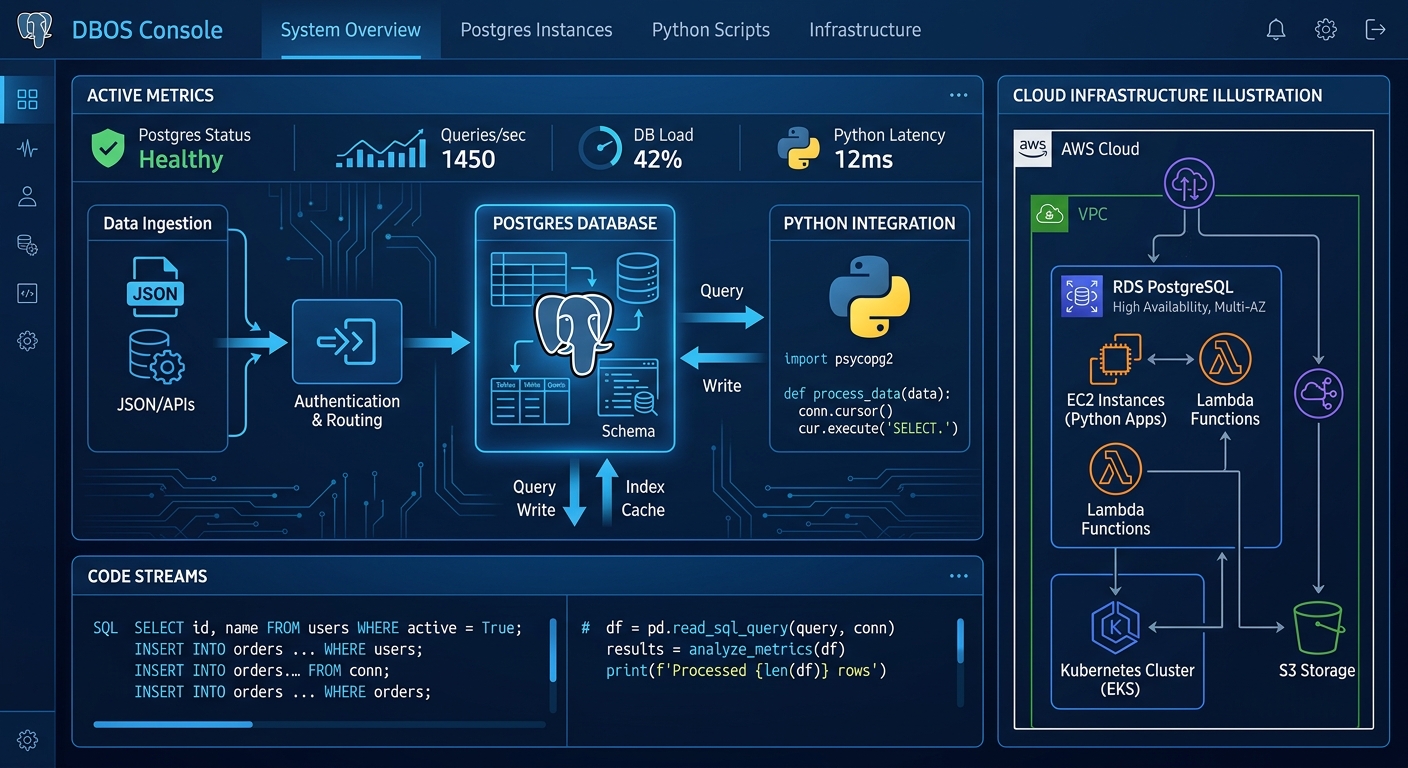
The idea is surprisingly elegant: every operation in your system is already writing to Postgres — orders, users, inventory changes. DBOS reads the Postgres transaction log to drive workflows. You don’t need a separate message queue, event store, or custom infrastructure. Your database becomes both your data store and your workflow execution engine. The operational footprint drops significantly because you’re not running a separate system — you’re using something you already have.
Getting started is straightforward if you’re already on Postgres. You write Python functions, point a config at your database, and decorate individual steps as retryable, inspectable workflow nodes. Each step’s input and output are logged. Each step can be individually replayed without re-running the entire workflow. Failure modes become reproducible instead of requiring full restarts.
The use case I keep coming back to: AI agent task orchestration. If your agent needs to search for information, read a document, write output, and verify correctness — DBOS wires those steps together with automatic retry and full visibility into each step’s execution. You get observability into agent reasoning without a separate tracing system. When something goes wrong, you can see exactly which step failed and what the inputs were, which is the difference between debugging and guessing.
The operational appeal is real: teams that couldn’t justify Temporal’s infrastructure overhead might find DBOS fits within what they’re already running. The constraint is that it’s tightly coupled to Postgres, which is a strength in some ways (simplicity, data locality) and a limitation in others (you can’t easily move workflows to a different database). Performance-sensitive real-time scenarios with very low latency requirements may not fit the model well, since transaction log reading introduces latency that direct function calls don’t have.
It’s early, and the ecosystem is still building out. But for teams already on Postgres who want workflow capabilities — particularly AI agent orchestration — without the operational overhead of a separate system, this is worth a half-day of exploration time. The gap it’s filling is real, and the approach is more elegant than I’ve seen from similar tools.