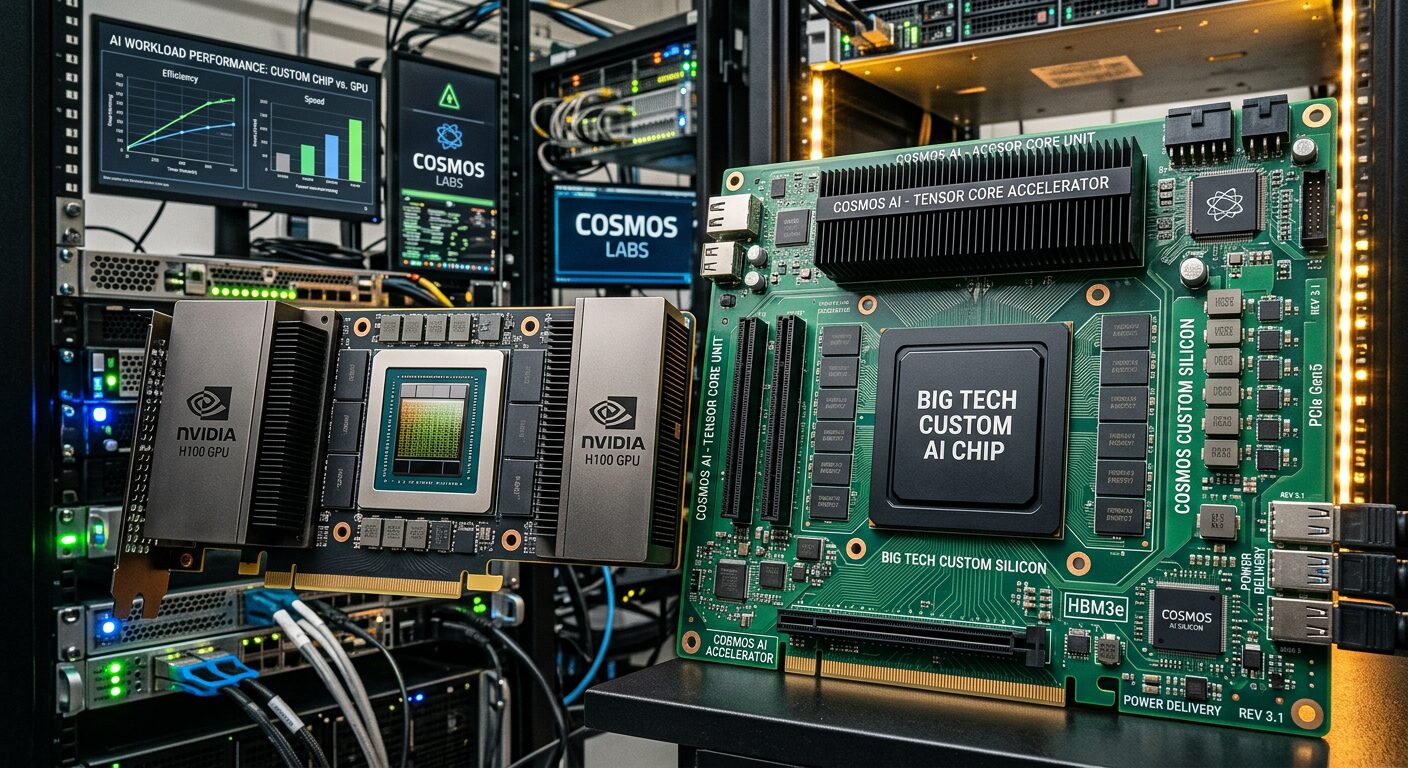
Big Tech Is Quietly Ditching Nvidia — and Building Its Own Future
OpenAI has Jalapeño. Google has TPUs. Amazon has Trainium and Inferentia. Microsoft has Maia. Meta has MTIA. Every major AI company is building its own silicon, and the list has grown long enough that it stopped being a rumor and started being a pattern.
H100s run thirty to forty thousand dollars each. GB200 NVL72 racks cost millions per installation. For companies burning through thousands of GPUs per training run, buying Nvidia is not a budget decision — it is a strategic dependency. Writing quarterly checks to a primary competitor starts to feel wrong after enough quarters.
Google TPUs lag Nvidia on raw training throughput. For inference — running the model after training is complete — TPUs are often the better choice. Faster per watt. Cheaper per query at scale. Google has been quietly winning the inference efficiency war while everyone was watching training benchmark announcements. The training market gets the headlines. Inference is where the actual revenue lives.
Chip supply has become a geopolitical consideration. The Anthropic Mythos block demonstrated what happens when hardware access becomes a policy lever. If your entire AI roadmap depends on chips manufactured in one place, subject to one country’s export regime, that is a concentration risk that nobody in enterprise IT is pricing in correctly. Ask yourself what your product roadmap looks like if your chip supplier gets restricted.
Amazon, Google, and Microsoft are all running custom silicon in production today. The economics of AI inference are changing. The chip race is about who controls the full stack. NVIDIA is still the leader and will remain so for the foreseeable future. But the customer list for custom silicon is growing, and the transition is underway.
It will not be clean. The CUDA ecosystem does not migrate overnight, and Nvidia’s software advantage is real and persistent. But the direction has been clear for about eighteen months. The question for enterprise buyers is not whether to evaluate custom silicon — it is when.