When Two Harvard Dropouts Took on NVIDIA
Then TSMC fabricated its first batch of chips in 2025, and the conversation changed.
By the end of June 2026, Etched had assembled something that looks less like a typical startup and more like a financial institutions reunion. The company quietly closed $800 million in total funding, including a $500 million round that wrapped in December with no public announcement. Stripes led the latest tranche on the investor list: VentureTech Alliance, Jane Street, Hudson River Trading, Two Sigma, Ribbit Capital. The angels are even more striking: Andrej Karpathy, Geoffrey Hinton, and Fei-Fei Li all put in personal checks, alongside billionaires Stanley Druckenmiller and Peter Thiel. That cap table alone tells you something about how seriously people with the most information are taking this bet.
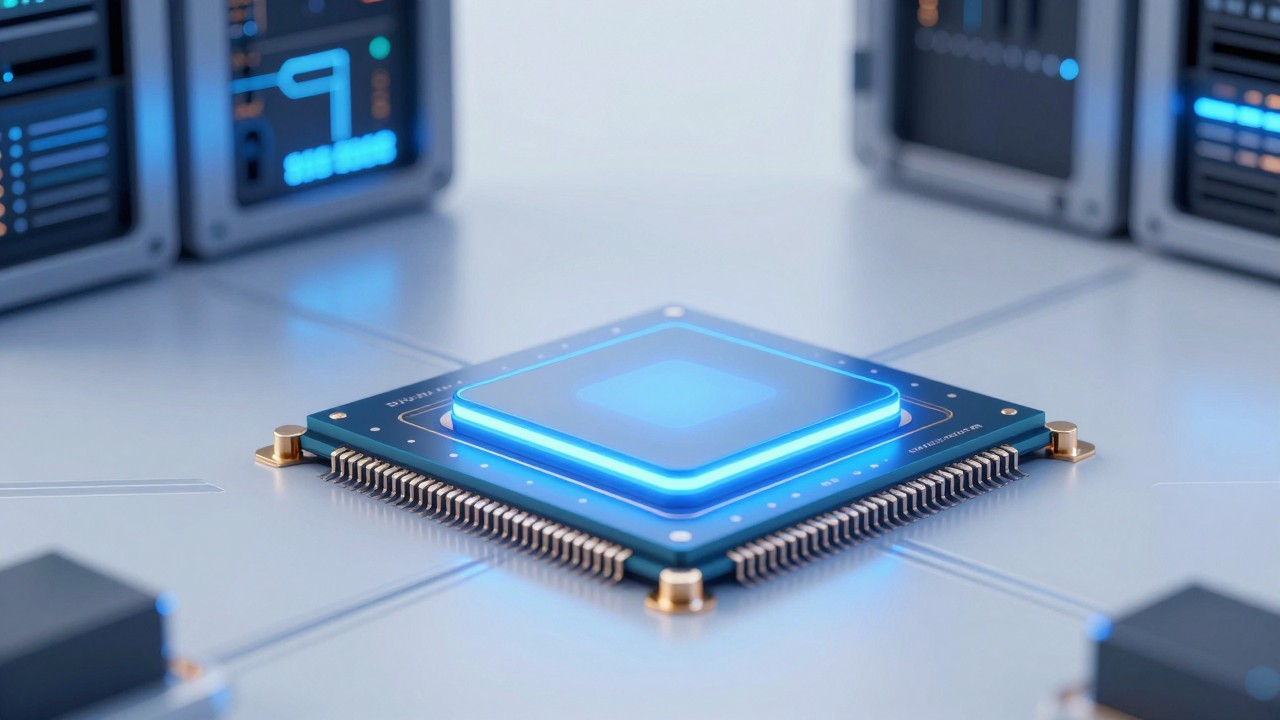
Etched calls its product “frontier inference clusters.” Strip away the marketing language and the idea is straightforward: build chips that run AI model inference faster and cheaper than general-purpose hardware can. Inference is the stage that happens after a model is trained. It is where the costs accumulate when you are serving millions of queries a day, and it is where most AI companies are hemorrhaging money right now.
The company says it already has $1 billion in orders from customers running large-scale inference operations. The first chips manufactured at TSMC are in customer hands for testing. That puts Etched further along than most chip startups ever get. The graveyard of promising semiconductor companies is full of designs that worked in the lab but never made it into a rack doing real work.
The competitive picture is getting crowded fast. Cerebras went public earlier this year. Groq closed $650 million and pivoted to offering compute as a service directly. Amazon, Google, and Microsoft are each building proprietary silicon for different parts of the AI workload. OpenAI is working with Broadcom on custom silicon. The hyperscalers have collectively decided they cannot rely on NVIDIA forever, and each is chasing their own alternative.
What Etched has going for it is focus. They are not trying to replace GPUs for training. They are not building a general-purpose chip. Their stack combines custom ASICs, purpose-built racks, and software tuned for one job: making inference faster and cheaper. That kind of narrow focus only works at a certain scale, which is why the $1 billion in pre-orders matters. It signals that real customers with real production workloads see a credible path to return on investment.
The hard part is competing with NVIDIA once the chips are actually in volume production. NVIDIA has years of driver optimization, software tooling, and a CUDA ecosystem that specialized chips have never caught up to. Etched is betting that raw performance-per-dollar for inference-heavy workloads will be enough to pull customers away regardless of software compatibility. Whether that thesis holds in the market will determine whether this is a real company or another expensive science experiment.
The bigger inference chip market, which almost nobody cared about five years ago, is now attracting serious competition from every direction. If the cost of deployment continues to matter more than the cost of training, Etched’s story is early in its first chapter. If it does not, the people who wrote those checks will have very expensive silicon and very patient LPs.