Listen Labs Raised 69M Making AI Voice Data Collection Actually Ethical
Listen Labs raised 69 million dollars after a viral billboard hiring stunt that got their name in front of every tech journalist in the industry. But behind the stunt was a real company with a real differentiator: they’ve built an approach to AI voice data collection that’s actually consensual, transparent, and auditable. That turns out to be both ethically important and commercially defensible.
Training voice AI requires enormous amounts of voice data. The traditional approach — scraping recordings without clear consent, paying gig workers fractions of a cent per recording, using data in ways participants don’t fully understand — has created genuine legal exposure for AI companies. The business model of acquire data now, sort out the ethics later is becoming harder to sustain as regulations tighten globally. GDPR, CCPA, and incoming AI-specific regulations are making that approach genuinely risky rather than just theoretically problematic.
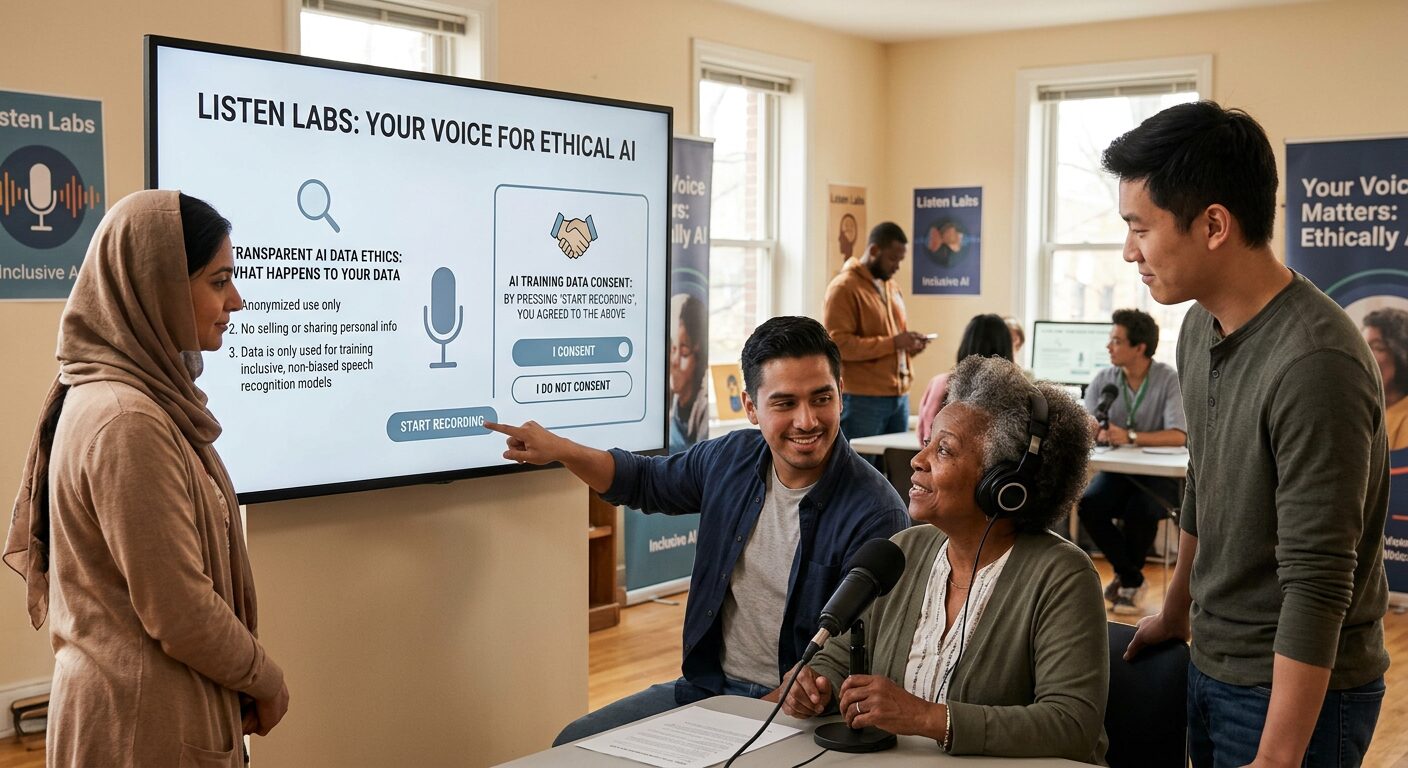
Listen Labs’ approach: participants know exactly what they’re recording, how their data will be used, and what they’re being paid. Informed consent at every step. That sounds like table stakes. In the AI training data industry, it’s genuinely unusual. Most data collection operations are still operating on the assumption that getting something done is equivalent to getting permission. Listen Labs is operating on the assumption that these are different things.
There’s a growing body of evidence that ethically collected data produces better AI. Models trained on data with genuine consent and proper compensation tend to have fewer biases, more diverse representations, and more reliable performance across demographic groups. The incentive structure matters: fair pay attracts a more diverse pool of participants, which produces better training data. This isn’t just an ethics argument — it’s a quality argument that has started showing up in benchmark results.
The company’s approach also has implications for data quality that go beyond the ethics conversation. When participants understand what they’re recording and why, and when they’re compensated fairly, they tend to produce more focused, higher-quality recordings. Distracted, rushed, or resentful data collection — which is what you get with most gig-economy-style voice data operations — produces worse outputs. Better incentives, better data. It’s not complicated, but the industry hasn’t been structured around this insight.
Listen Labs is betting that as AI regulations tighten globally, their ethically sourced data will command a premium and be more defensible to enterprise customers who face their own regulatory exposure. It’s a reasonable bet. Whether the unit economics work at scale is another question — ethically sourced voice data costs more than scraped data. Whether enterprises pay enough of a premium to make that work is the actual bet the investors are making.
69 million dollars is serious money for a data collection company. The billboard stunt got attention. Whether the product can sustain it — that’s the question they’ll answer over the next two years. The voice AI market is real and growing. Whether Listen Labs can be the ethical default for enterprises that need to demonstrate good data governance to their own regulators — that’s the opportunity they’re positioning toward. It’s a real opportunity in a market that’s starting to take data provenance seriously.