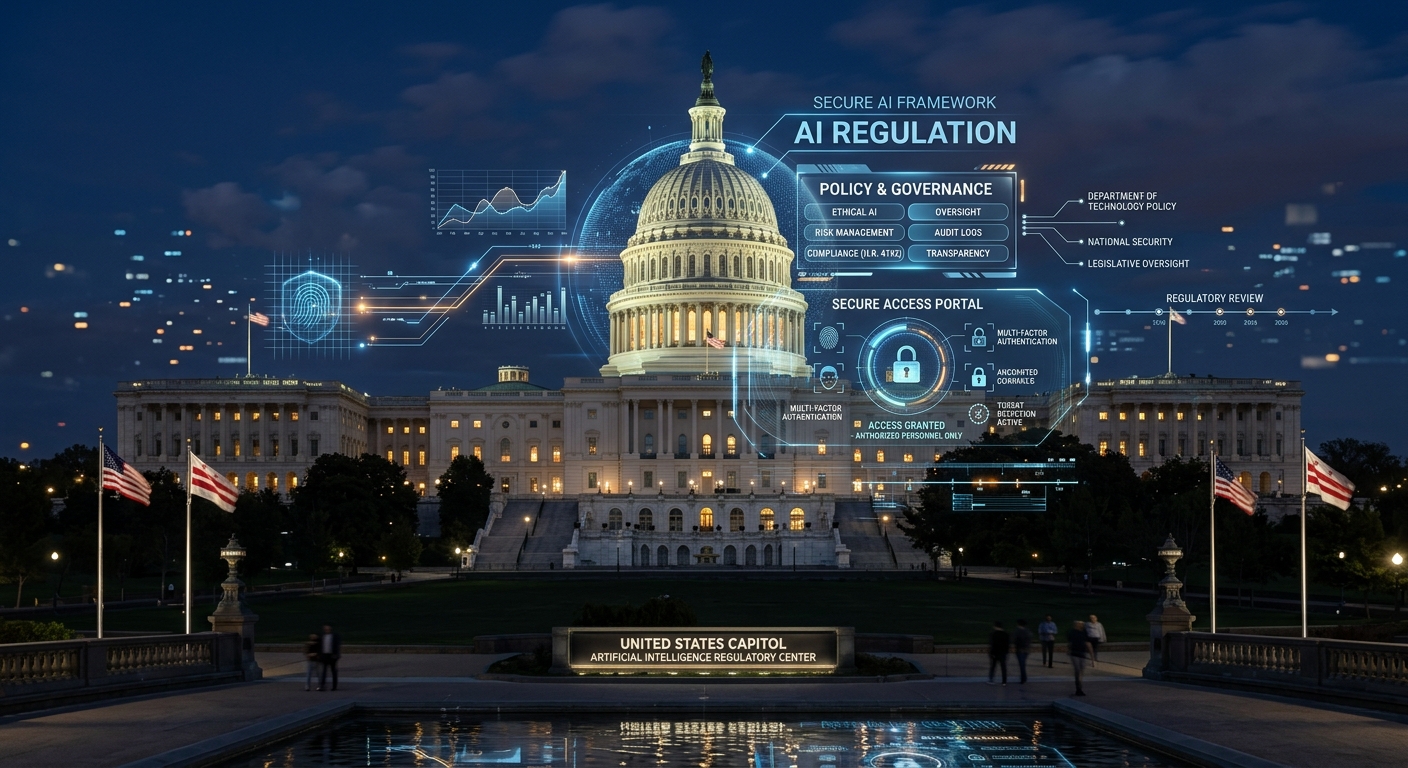
The U.S. Government Is Now Deciding Who Gets to Use the Most Powerful AI
The U.S. government is now requiring approval before companies can give users access to the most powerful version of ChatGPT. This is a meaningful shift in how the government approaches frontier AI — and it’s worth understanding what’s actually happening, because the headline doesn’t tell the whole story.
Notably, this isn’t a content restriction. It’s a capability restriction at the model level. The government isn’t saying what you can and can’t do with ChatGPT — it’s saying who can access which tiers of the underlying model capability, and requiring companies to get sign-off before enabling that access.
The timing makes this more interesting than it would otherwise seem. When the administration changed, the prevailing assumption in Silicon Valley was deregulation — lighter rules, fewer approvals, a more permissive environment for AI development. Instead, the approach shifted shape. Not lighter rules. Different rules. The mechanism changed from regulating what people do with AI to regulating who can access the underlying capability in the first place.
The logic behind this is internally consistent, even if it’s uncomfortable. If frontier AI models represent a genuine national security concern — and most intelligence communities take that position — then controlling distribution at the model level makes more sense than trying to track every individual use case after the fact. It’s a different theory of the problem than content moderation. Rather than policing behavior, it tries to control access.
What’s less clear is whether this actually works technically. Capability restrictions are notoriously difficult to maintain once a model is running on a distributed infrastructure. The history of software copy protection and DRM is not encouraging on this front. A model that can be called via API is a model that can be probed, extracted, and potentially replicated by anyone with enough access and motivation. The restriction controls distribution, not proliferation.
The broader implication is worth sitting with: the U.S. government is positioning itself as a gatekeeper for AI capability in a way that’s novel for a democratic government. Normally, governments regulate specific applications of technology. Here, it’s attempting to regulate the capability itself, which is a more expansive claim about government authority over a general-purpose technology.
Whether this holds up legally, technically, or politically is an open question. But the landscape for AI access is clearly changing shape, and the details of how these restrictions work in practice will be worth watching closely over the next year.