Daisy.so Review: One Product Photo In, a Full Marketing Campaign Out
There’s a production bottleneck that most content teams know well: you have one product photo, and you need a full campaign — main visuals, social posts, video clips, carousel ads — and the designer assigned to it has three other things due this week. The result is usually a version that’s “good enough” rather than right.
Daisy. So compresses that pipeline into minutes, not days.
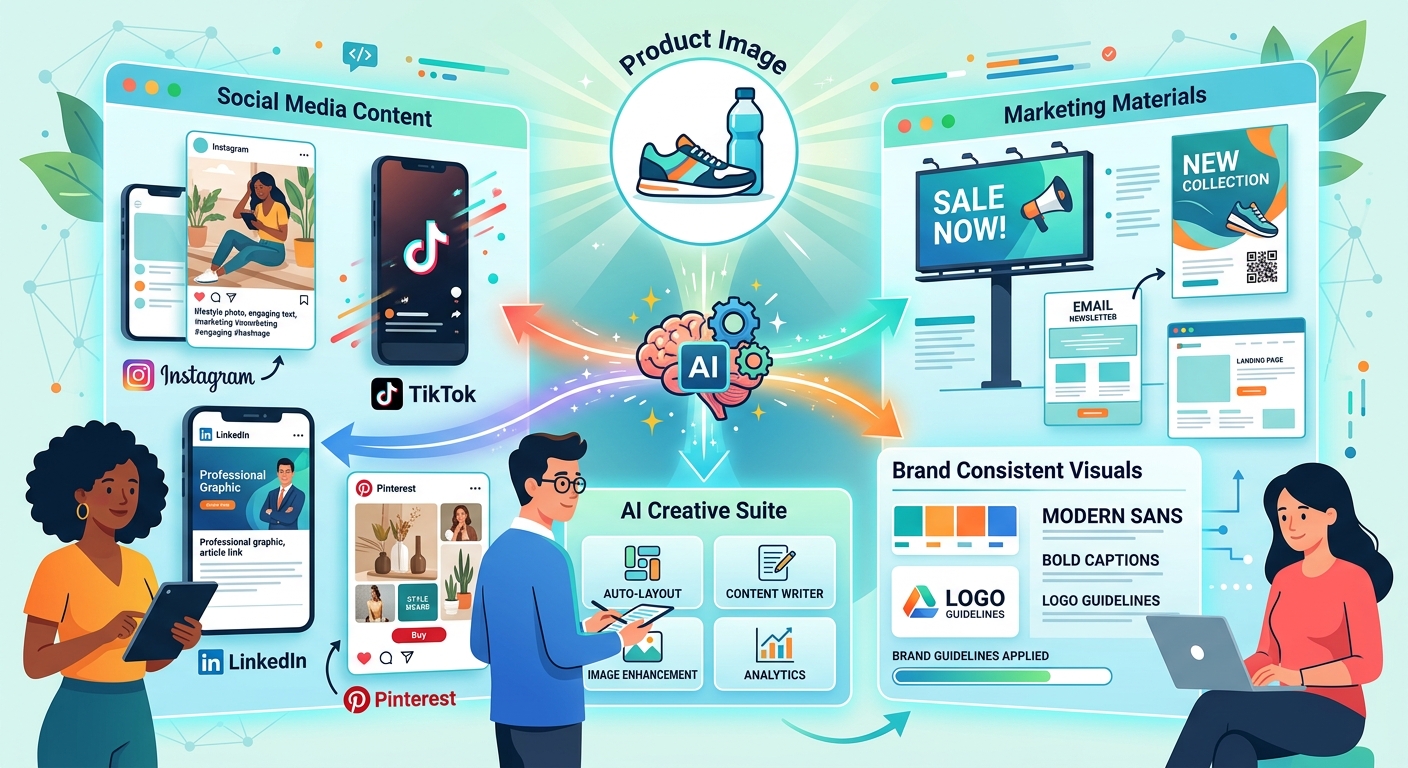
The workflow is straightforward: upload one image, select a style preset called a Pod, and the platform generates a complete set of on-brand materials — product photography, video clips, carousel content — without a unique prompt for each piece. You pick the Pod once. Everything that comes out shares the same visual language.
A Pod is a style fingerprint. You define the aesthetic once — lighting, mood, color grading, and visual tone. From that point, every output carries that identity forward. Swap in a different product photo, keep the same Pod, and your entire campaign feels like it came from the same creative director. Consistency without starting from scratch each time.
What surprised me was how much this changes the creative iteration process. Because the Pod system is fast, you can generate ten different style variations of the same campaign in the time it would normally take to brief one. That shifts how teams think about creative testing — you can actually try different directions instead of committing to one and hoping it works.
The use case that makes the most sense: product teams producing high-volume, multi-platform content without dedicated design resources. DTC brands, e-commerce operators, and anyone whose content output directly drives revenue. For these teams, the bottleneck isn’t creativity — it’s production speed and consistency. Daisy. So addresses both.
The honest limitations: the platform is still building out its template library, and the output quality varies by category. Product photography in simple categories — clothing, accessories, food — tends to work well. Complex products or very specific art direction can require more iteration. And the video output, while improving, still shows the telltale signs of AI generation in some lighting and motion scenarios.
What I keep coming back to: the Pod concept is the real insight. Content consistency is a production problem more than a creative one. Daisy, so solving the production side means the creative team spends time on direction, not reproduction. That’s the right split.