Your AI Agent Is Getting Worse. The Problem Is Probably Memory.
After a few weeks with a new AI agent, something predictable tends to happen. The quality of responses starts slipping. The agent misreads what you want, brings up things from old conversations that have no business being there, and gradually becomes less reliable. When this happens, the usual instinct is to blame the model or assume the technology hit a ceiling.
Usually neither.
The problem is often not the model. It is context pollution. Agents with memory accumulate context across sessions, which is useful until unrelated information starts bleeding through. The agent pulls in details from a previous project, applies them where they do not belong, and confidently gives the wrong answer. This feels like the tool got worse. It did not. The context it was working from got noisy.
This pattern shows up constantly. Memory gets treated like a place to store anything that might be useful. Sprint notes go in. One-off observations go in. Project status updates, temporary notes, anything that seemed worth saving at the time gets thrown in. Over time, the memory accumulates both signal and noise, and the agent starts treating both with equal weight.
Memory, in the way these systems use it, is not a transcript. It is not a bookmark collection. It is not a holding tank for anything you might need someday. It is the actual context the agent reasons from. When that context is mixed with noise, the reasoning is mixed with noise.
Here is the distinction nobody makes until it is too late: some memory is worth keeping indefinitely, and some memory is worth keeping only temporarily. “User prefers brief responses” stays useful forever. “User is three months into a project that ends in two weeks” will become misleading. One belongs in the long-term memory. The other belongs in project notes, where it can be retired when the project ends.
Stale information causes the most damage. If something was accurate when it went in but has since changed, an agent relying on it will make calls based on a version of reality that no longer exists. That is worse than having no information at all, because the agent still sounds certain.
What belongs in long-term memory: recurring patterns in how someone works, stable communication preferences, decision criteria that apply across many different situations. What does not: anything tied to a specific task that will be done soon, anything that describes a temporary state, one-off observations that do not establish a pattern.
The entry format matters more than people realize. A good memory entry is one or two sentences. A bad one is a paragraph. “User wants conclusions stated up front” is useful. “User prefers brief responses because they are busy and do not have time to read through lengthy explanations” is not better. It is just harder to parse and more likely to contain details that will expire.
My rule: if the information is specific to this moment, this task, or this phase of work, leave it out. That single habit does more for long-term memory quality than any audit process.
If you have been using an agent for a while, the memory has probably already accumulated problems. The signal shows up clearly: the agent starts misaligning with tasks it used to handle correctly. That is when you go in and sort through what is there.
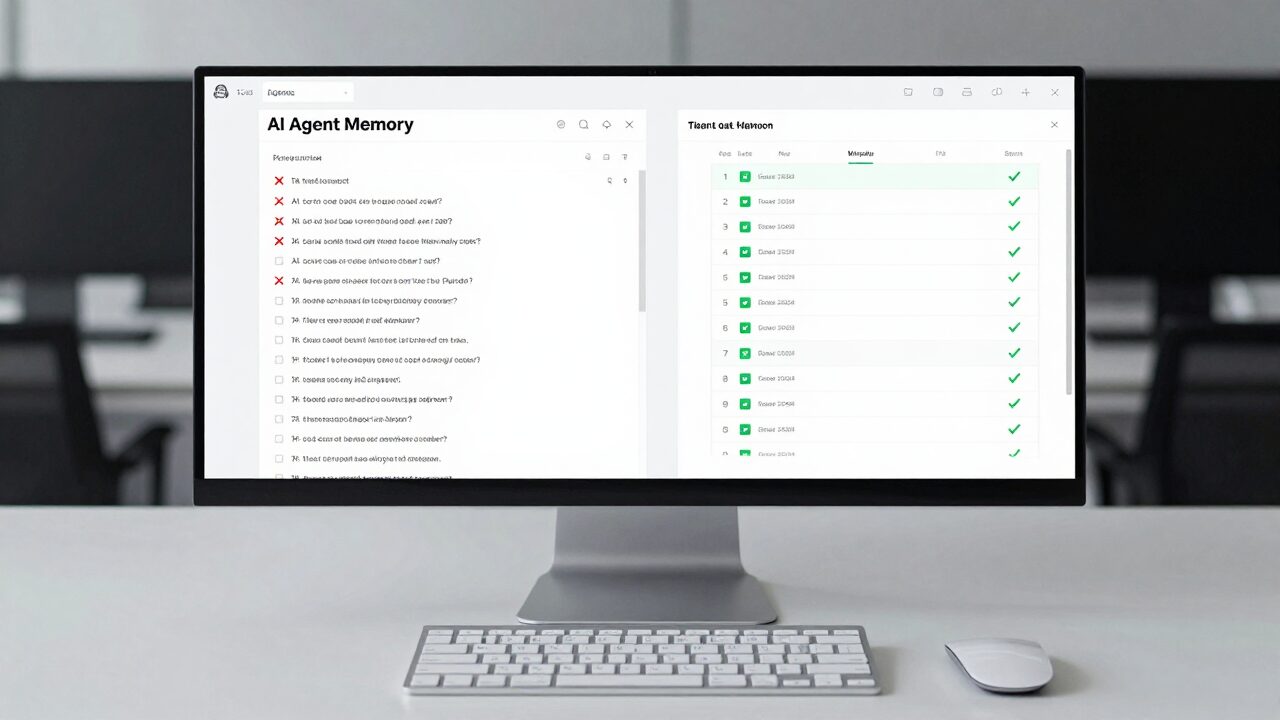
A memory audit is straightforward. Go through everything and sort it: keep what establishes durable patterns, compress entries that are longer than they need to be, delete anything tied to a finished task or information that has since changed. Good entries are short, stable, and actionable. “User reviews in draft before publishing” tells the agent something useful that will still be true next quarter. “User seemed frustrated last week” tells it nothing it can act on and probably was not accurate to begin with.

Think of it like a desk instead of a storage unit. A few deliberately placed tools you actually reach for. Not a drawer full of things you thought might be useful someday. The agents that work well long-term are the ones where someone bothered to keep it that way. Most of the time, that just means remembering to forget at least as aggressively as you remember.